Fiction · Short Reads
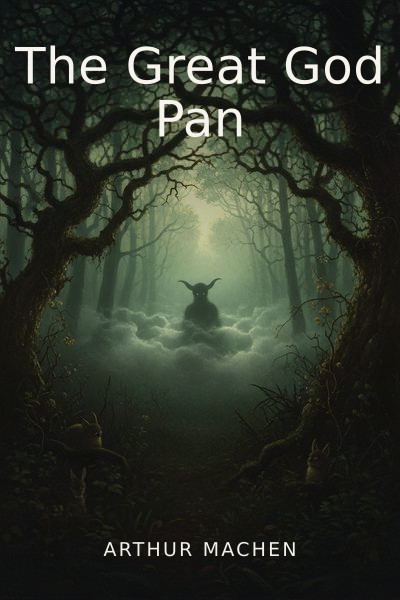
The Great God Pan by Arthur Machen — Summary, Key Ideas & Full Text
72 pages8 chapters1h 27m read1h 2m speed read✦ 9-min Big ideas★ 3.5 (41)Free · no account
Rate it
Explore the terrifying intersection of science, mysticism, and the human psyche in Arthur Machen's 'The Great God Pan.'
In 'The Great God Pan,' Arthur Machen crafts a chilling tale that delves into the realms of transcendental medicine, the nature of reality, and the darker corners of human existence. The story revolves around Dr. Raymond's ambitious experiment to uncover the hidden truths of the universe, leading to horrifying revelations that challenge the boundaries of science and mysticism. Through the eyes of Mr. Clarke, who witnesses the experiment, readers are taken on a journey that intertwines the mundane with the supernatural, revealing the fragility of perception and the lurking horrors beneath the surface of everyday life. As the narrative unfolds, themes of curiosity, fear, and the unknown emerge, compelling readers to confront their own beliefs about reality and the unseen forces that shape our lives.
Arthur Machen's 'The Great God Pan' is a haunting exploration of the boundaries between science and the supernatural, reality and illusion. Through the narrative's intricate layers, readers are compelled to confront their own beliefs about existence, knowledge, and the unseen forces that shape our lives. The themes of curiosity, fear, identity, and the nature of evil resonate deeply, urging a reflection on the human condition and the consequences of seeking truth. As the characters navigate their encounters with the unknown, the story serves as a cautionary tale about the potential horrors that lie beneath the surface of reality. Ultimately, Machen's work challenges readers to embrace the mysteries of life while acknowledging the inherent dangers of curiosity and ambition.
“I say that all these are but dreams and shadows; the shadows that hide the real world from our eyes.”
“I should like to believe it is all true.”
“Come and see me by all means; but we will talk on more cheerful topics than this.”
Read Arthur Machen's work free on Lumina — the complete text plus an 8-minute summary and key ideas, no account needed