

World War, 1914-1918 · History and criticism · English literature
The Great War and Modern Memory by Paul Fussell — Summary, Key Ideas & Quotes
1975363 pages✦ 3-min Big ideas★ 4.0 (4)
Rate it
In this classic work, Paul Fussell illuminates the British experience on the Western Front from 1914 to 1918, focusing primarily on the literary means by which The Great War has been remembered, conventionalized, and mythologized. Drawing on the work of important wartime poets such as David Jones and Wilfred Owen, on the memoirs of Siegfried Sassoon, Robert Graves, and Edmund Blunden, and on numerous other personal records housed in the Imperial War Museum, this award-winning volume provides an intimate and intensely poetic account of the event that revolutionized the way we see the world. It has been hailed as "humanly wise and compassionate" (Saturday Review), "original and brilliant" (Lionel Trilling), "bright and sensitive" (The New Yorker), and "probing, sympathetic, and illuminating" (The New Republic). It is an undisputed classic of cultural criticism. (from Amazon)
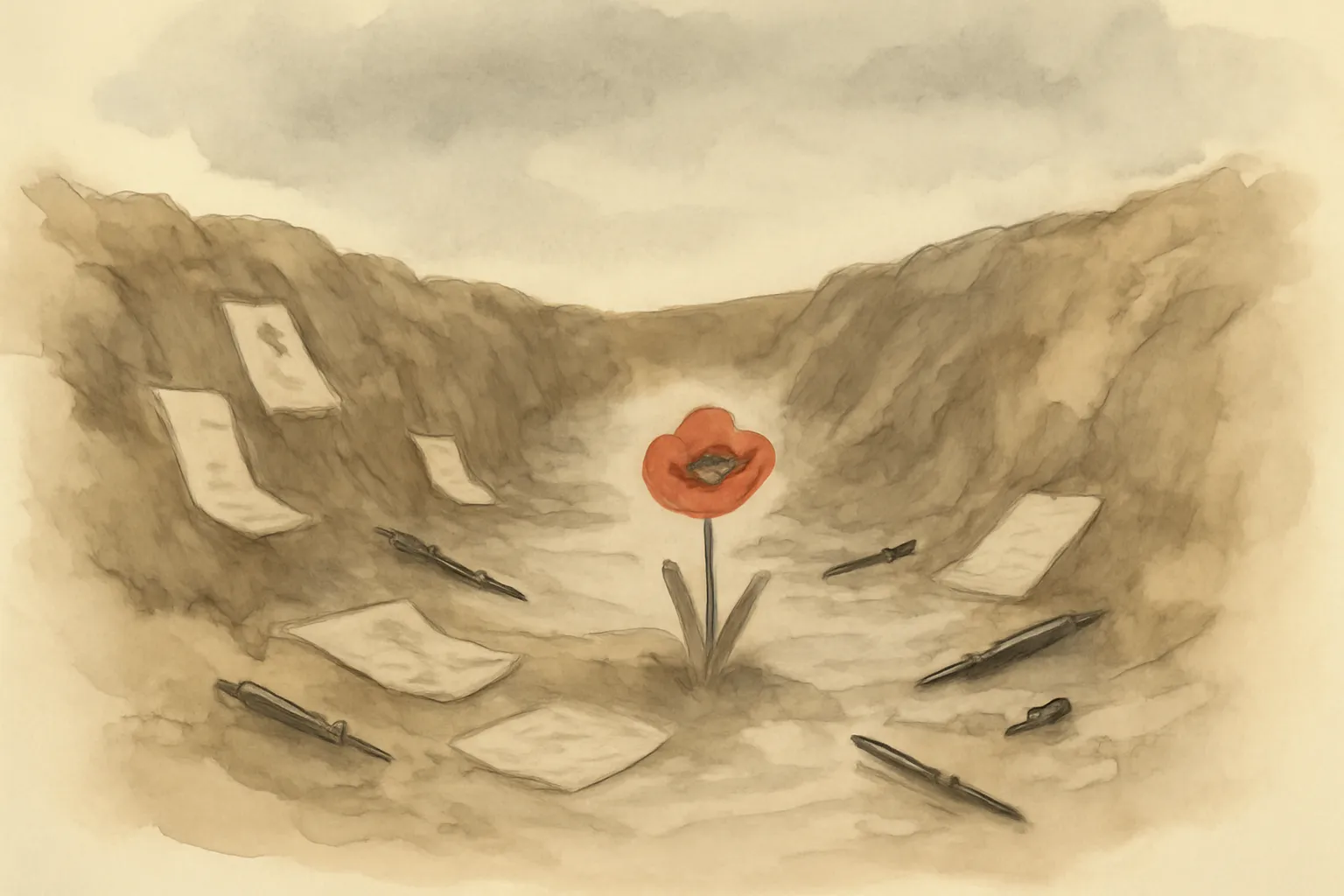
Fussell argues that the unprecedented horrors of trench warfare shattered traditional ways of describing and understanding experience. The old heroic and romantic language proved inadequate for the mud, terror, and irony of the Western Front. Writers and poets responded by forging new literary forms and metaphors, often marked by irony, understatement, and dark humor. This linguistic crisis, Fussell suggests, permanently altered the way war and suffering are represented in Western culture.
The book explores how the collective memory of World War I was shaped by myth-making. Fussell shows how soldiers and later generations constructed narratives—of sacrifice, futility, and lost innocence—that both reflected and distorted the reality of the trenches. Through poetry, memoir, and popular culture, the war became a symbol of the modern condition: disillusioned, ironic, and haunted by loss.
“Every war is ironic because every war is worse than expected.”
“The real war will never get in the books.”