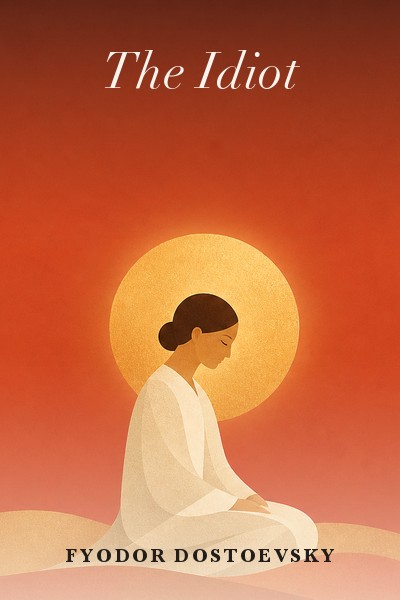

A pure-hearted prince returns to a corrupt society — innocence, faith, and tragedy in Tsarist Russia.
Read full overviewShow less›
Fyodor Dostoevsky's 'The Idiot' intricately explores the life of Prince Lev Nikolayevich Myshkin, a man whose innocence and compassion stand in stark contrast to the corruption and moral ambiguity surrounding him. As he navigates the complexities of Russian society, the prince's encounters with various characters reveal deep philosophical questions about human nature, love, and the societal constructs that shape our lives. Through the prince's eyes, readers are invited to reflect on the nature of goodness and the often harsh realities of life. This novel is not just a narrative about a man deemed an 'idiot' by society; it is a profound exploration of the human condition, making it a timeless classic that resonates with readers across generations.
In 'The Idiot,' Dostoevsky crafts a profound narrative that explores the depths of human nature, love, and the societal constructs that shape our lives. Through the trials of Prince Myshkin, readers are confronted with the complexities of innocence in a morally ambiguous world. The interplay of compassion, ambition, and the quest for identity illustrates the multifaceted nature of human relationships and the challenges of maintaining one's integrity amidst societal pressures. As the characters navigate their intertwined destinies, the novel raises timeless questions about the essence of goodness, the impact of the past, and the true meaning of love. Ultimately, 'The Idiot' serves as a poignant reminder of the struggles inherent in the human experience, inviting readers to reflect on their own lives and the choices that define them.
- 1The Innocence of the Prince
- 2The Nature of Goodness
- 3Love and Sacrifice
- 4The Role of Society
- 5Madness and Sanity
A glimpse inside

Prince Myshkin, often referred to as the 'Idiot,' embodies a purity and innocence that sets him apart from the people around him. Read morePrince Myshkin, often referred to as the 'Idiot,' embodies a purity and innocence that sets him apart from the people around him. His lack of guile and genuine compassion make him a figure of hope in a society dominated by greed and selfishness. Upon his return to Russia after a long stay in a Swiss sanatorium, Myshkin's interactions reveal how his naive perspective serves as both a strength and a vulnerability. For instance, when he meets the beautiful Nastasia Philipovna, his sincere admiration for her beauty starkly contrasts with the manipulative intentions of others. Myshkin's innocence invites both affection and exploitation, showcasing the complexities of human relationships where genuine feelings are often overshadowed by ulterior motives. This theme of innocence versus societal corruption runs throughout the novel, highlighting the struggle between idealism and reality. Show less
Dostoevsky probes deeply into what it means to be good in a world that often rewards the opposite. Myshkin's character raises questions about moral absolutism versus rela… Read moreDostoevsky probes deeply into what it means to be good in a world that often rewards the opposite. Myshkin's character raises questions about moral absolutism versus relativism. His belief in the innate goodness of people is challenged repeatedly, particularly through his interactions with characters like Rogojin and Gania, who embody darker aspects of human nature. The prince's attempts to understand and connect with others often lead to tragic outcomes, illustrating the difficulty of maintaining one's moral compass amidst societal pressures. For example, his compassionate but naive attempts to rescue Nastasia Philipovna from her destructive lifestyle ultimately lead to heartbreak and conflict. This exploration of goodness serves as a critique of a society that often prioritizes ambition and power over altruism, prompting readers to reflect on their own values. Show less
Read the full text — free
About the author
Fyodor Dostoevsky has 5 works free to read on Lumina, including Crime and Punishment, Notes from the Underground, The Brothers Karamazov.
All 5 books by Fyodor Dostoevsky →Frequently asked
Worlds to get lost in
Take Lumina everywhere
Read offline, listen to AI summaries, speed-read, and sync your progress across devices — free on iPhone.
Download for iPhone