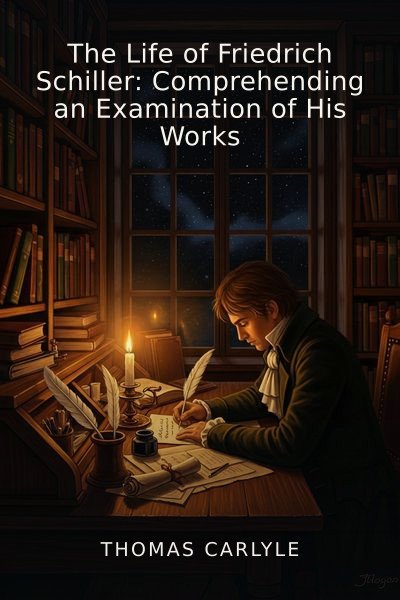

Friedrich Schiller's life illustrates the transformative power of art and the relentless pursuit of ideals amidst personal and societal turmoil
Read full overviewShow less›
Thomas Carlyle's exploration of Friedrich Schiller's life and works offers a profound insight into the struggles and triumphs of one of Germany's greatest playwrights and poets. Through a detailed examination of Schiller's youth, his literary journey, and the impact of his philosophical inquiries, the reader gains an understanding of how Schiller's personal adversities shaped his artistic vision. Carlyle presents not merely a biography, but a reflection on the nature of creativity, ambition, and the human condition. As Schiller navigated the complexities of his time—marked by political upheaval and cultural transformation—his writings emerged as a beacon of hope and enlightenment, resonating far beyond the borders of his native land. This summary will distill Schiller's essence, highlighting the key ideas that define his legacy and the lessons that emerge from his life story.
Friedrich Schiller's life reflects the profound interplay between personal struggle and artistic expression. Through his journey from a constrained upbringing to becoming a celebrated playwright and philosopher, Schiller embodies the pursuit of freedom, justice, and moral integrity. His works not only capture the essence of human experience but also challenge audiences to reflect on their values and responsibilities. Schiller's legacy serves as a reminder of the transformative power of art, inspiring generations to engage with the complexities of life and advocate for a more just society. As we navigate our own challenges, Schiller's insights into the human condition remain relevant, urging us to embrace our ideals and strive for a better world.
Ratings at a glance
- 1The Formative Years of a Revolutionary Spirit
- 2The Impact of 'The Robbers'
- 3Persecution and the Quest for Independence
- 4The Pursuit of Historical Truth
- 5The Role of Friendship with Goethe
A glimpse inside

Friedrich Schiller was born in 1759 into a life marked by strict discipline and expectations. His father, an army doctor, imposed a rigid upbringing that stifled Schiller… Read moreFriedrich Schiller was born in 1759 into a life marked by strict discipline and expectations. His father, an army doctor, imposed a rigid upbringing that stifled Schiller's creative impulses. Yet, this environment also instilled in him a sense of rebellion against oppressive authority. Early on, Schiller exhibited a passion for literature and poetry, which blossomed during his studies at the Duke of Wuerttemberg's Free Seminary. Here, he felt constrained by formal education but simultaneously inspired by the realm of ideas. His literary ambitions ignited a passionate rebellion against the conventional paths set before him, leading him to write 'The Robbers,' a play that encapsulated the turmoil and fervor of his youthful spirit. This initial struggle against societal norms laid the foundation for Schiller's later works, which would challenge the status quo and advocate for personal freedom and moral integrity. Show less
Schiller's breakthrough play, 'The Robbers,' is not just a narrative of rebellion but a reflection of his own inner turmoil and aspirations. Read moreSchiller's breakthrough play, 'The Robbers,' is not just a narrative of rebellion but a reflection of his own inner turmoil and aspirations. The play's characters, particularly Karl, embody the struggles of a young man seeking freedom from societal constraints, mirroring Schiller’s own experiences. The stark contrast between the ideals of liberty and the harsh realities of life resonated with audiences, generating a whirlwind of praise and criticism alike. Critics lauded its emotional depth, while others condemned its moral implications, viewing it as a dangerous glorification of lawlessness. Schiller himself grappled with the ethical ramifications of his work, leading to a deeper understanding of the complexities of human nature. 'The Robbers' became a catalyst for Schiller's evolution as a thinker and artist, solidifying his place in the literary canon and sparking discussions about freedom, justice, and the human condition. Show less
Read the full text — free
About the author
Read Thomas Carlyle's work free on Lumina — the complete text plus an 8-minute summary and key ideas, no account needed