Fiction
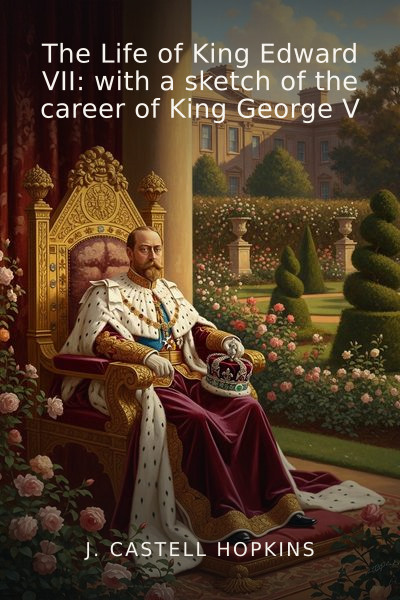
The Life of King Edward VII: with a sketch of the career of King George V by J. Castell Hopkins — Summary, Key Ideas & Full Text
481 pages29 chapters9h 40m read6h 52m speed read✦ 10-min Big ideasFree · no account
Rate it
King Edward VII's reign was a transformative era that bridged the gap between traditional monarchy and modern democracy, setting the stage for a new century of British identity
The life of King Edward VII is a captivating narrative that reveals how a prince navigated the complexities of royal duty while embodying the spirit of his time. From his early years as the Prince of Wales, where he was shaped by the influential figures of his parents, to his eventual accession to the throne, Edward's life was marked by both personal trials and public triumphs. This summary explores his significant contributions to the British Empire, his role in modernizing the monarchy, and the lasting legacy he left behind. Readers will gain insights into the interplay of royal responsibilities and public expectations, the evolution of British society during his reign, and the ways in which Edward's character and decisions shaped a pivotal era in history.
The life and reign of King Edward VII encapsulate a pivotal moment in British history, where the monarchy began to reconcile its traditional role with the demands of a modern democracy. His ability to connect with the public and navigate the complexities of international relations set the stage for a new era of royal engagement. Edward's legacy is evident in the manner in which subsequent monarchs approached their roles, blending duty with a more personal touch. Through his diplomatic efforts, cultural leadership, and commitment to public service, Edward VII not only shaped his own time but also left an enduring influence on the British monarchy and its relationship with the people.
“He had not only the great example and life of his predecessor as a model and as a comparison; not only the same vast and ever-changing and expanding Empire to rule over; not only a similar myriad-eyed press and public to watch his every expression and movement.”
“The married life of Queen Victoria and the Prince Consort was one of the happiest recorded in history or known in the private annals of individual lives.”
“It was, in reality, the first break in the hitherto steady progress of the Manchester school theory regarding ultimate Empire disruption.”
Read J. Castell Hopkins's work free on Lumina — the complete text plus an 8-minute summary and key ideas, no account needed