Romance · Fiction
The Red Lily — Complete by Anatole France — Summary, Key Ideas & Full Text
253 pages35 chapters5h 5m read3h 37m speed read✦ 9-min Big ideasFree · no account
Rate it
In 'The Red Lily,' Anatole France weaves a tapestry of love, art, and the bittersweet nature of human relationships against the backdrop of a vibrant Paris and the enchanting landscapes of Italy
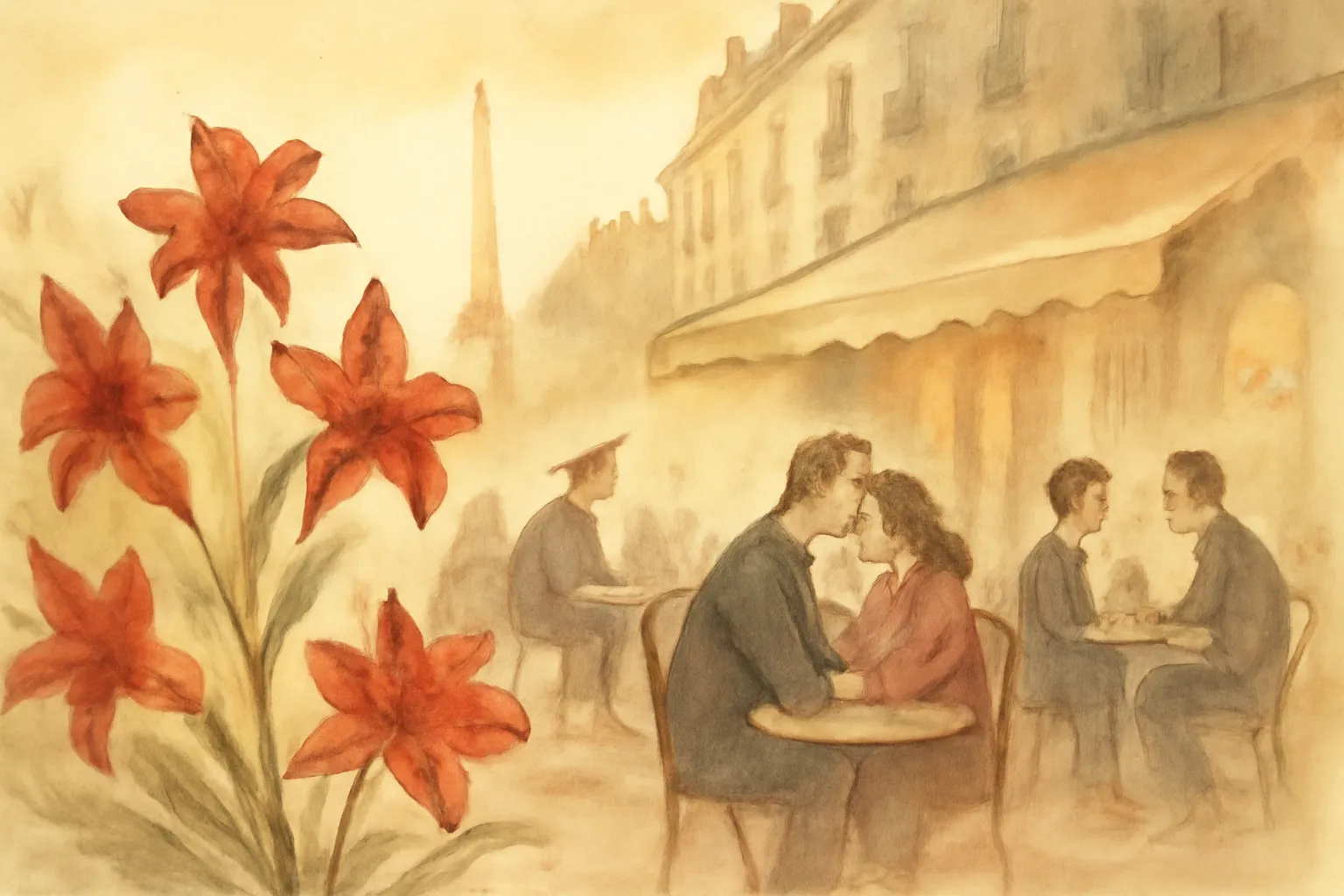
Anatole France's 'The Red Lily' is a rich narrative that delves deep into the lives of its characters, exploring themes of love, beauty, and the complexities of human emotions. Through the lives of Therese and Robert, the novel presents a vivid portrayal of a woman caught between societal expectations and her own desires. As the story unfolds, readers are treated to a journey that traverses the artistic landscapes of Florence and the emotional corridors of the heart. France's lyrical prose invites readers to reflect on the nature of love and the often-painful choices that accompany it, making this work both a celebration of beauty and a profound meditation on the human experience. In this summary, the key themes and memorable moments will be explored, revealing the intricate layers of France's storytelling.
In 'The Red Lily,' Anatole France masterfully weaves together the threads of desire, art, and the complexities of human relationships. Through the rich tapestry of Therese's life, readers are invited to reflect on the nature of love, the weight of societal expectations, and the pursuit of self-acceptance. The novel's exploration of beauty, both transient and profound, serves as a poignant reminder of the delicate balance between aspiration and reality. France's lyrical prose and insightful observations create a narrative that resonates deeply, urging readers to confront their own desires and the choices that shape their lives. Ultimately, 'The Red Lily' stands as a timeless exploration of the human experience, illuminating the intricate dance between love, art, and the quest for identity.
“She thrust her hand among the flowery branches of the guelder roses to make their silvery balls quiver.”
“In the sky the first stars appeared.”
“One would think that the wind would put them out.”
Read Anatole France's work free on Lumina — the complete text plus an 8-minute summary and key ideas, no account needed