The Satyricon unfolds a vivid, satirical panorama of Roman decadence through the escapades of Encolpius and his companions
Read full overviewShow less›
Petronius Arbiter's 'The Satyricon' is a remarkable literary work that captures the essence of Roman decadence and the absurdities of aristocratic life. Through a blend of humor, social commentary, and vivid storytelling, it explores the lives of its characters while critiquing the moral and social failings of the time. The text is not merely a satirical narrative but a complex tapestry woven with themes of love, power, and the human condition. Readers will encounter a world where the grotesque and the comedic intertwine, revealing the flaws of both individuals and the society they inhabit. This exploration of the human experience, set against the backdrop of a collapsing empire, remains relevant and poignant today.
The Satyricon remains a seminal work that transcends time, offering a candid and often humorous exploration of human nature and societal flaws. Its rich narrative and complex characters provide insights into the decadence of Roman society while resonating with contemporary themes of ambition, desire, and morality. Petronius's ability to weave satire with profound social commentary ensures that the Satyricon remains relevant today, inviting readers to reflect on the absurdities of their own lives and the world around them. As a work of art, it challenges us to confront the complexities of the human experience, making it a timeless classic that continues to captivate audiences.
- 1Complex Structure and Fragmentation
- 2Petronius: The Arbiter of Elegance
- 3The Dinner of Trimalchio: A Microcosm of Roman Society
- 4Realism and the Portrayal of Character
- 5Themes of Love, Desire, and Power
Notable quotes
“Vous verrez que vous avez affaire a un homme.”
“Giton venait de la deflorer, et de remporter une victoire sanglante.”
“Ses camarades se saisissent de moi et de Quartilla.”
A glimpse inside
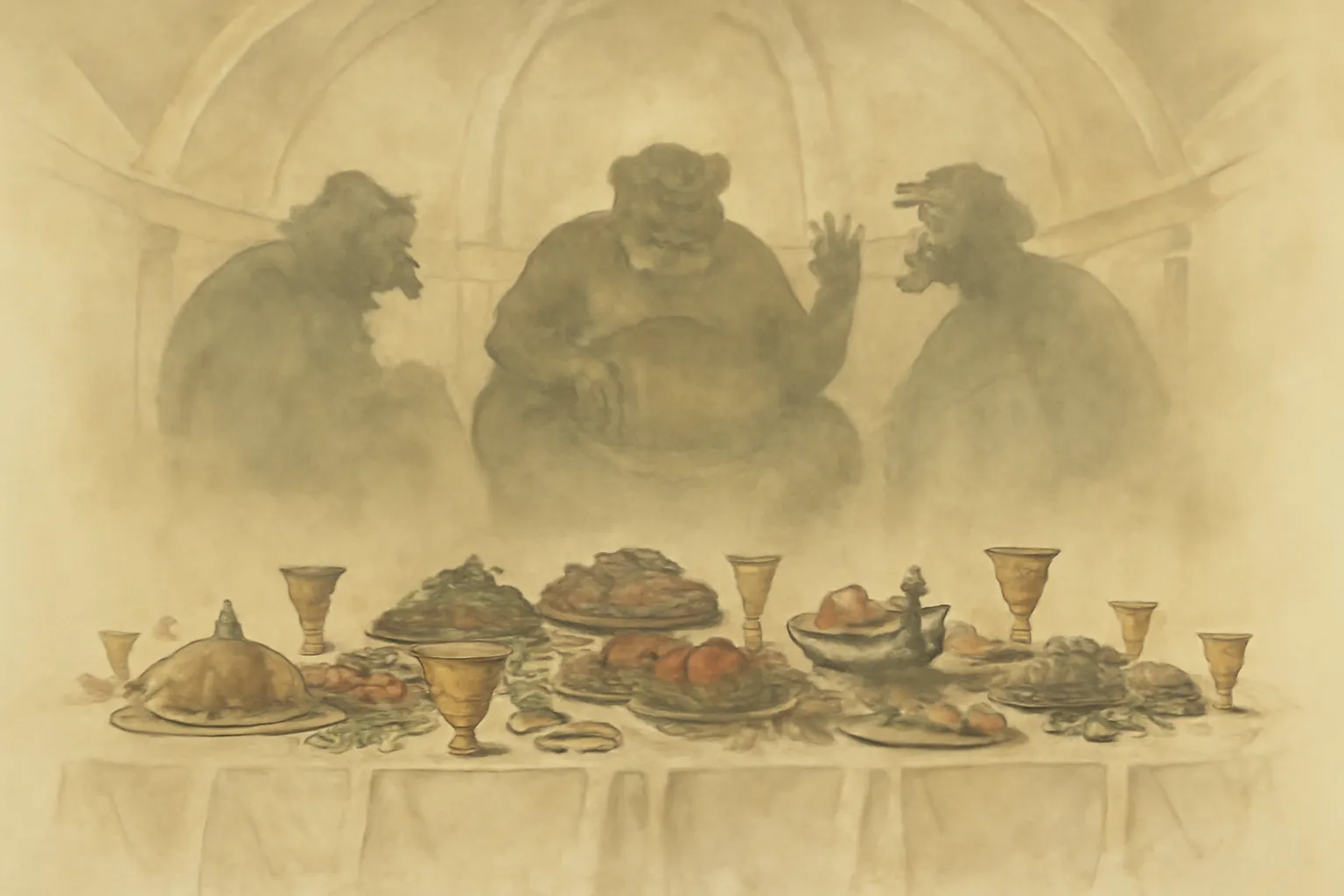
The Satyricon is not a linear narrative but a collection of interconnected episodes, with the most celebrated being the Dinner of Trimalchio. Read moreThe Satyricon is not a linear narrative but a collection of interconnected episodes, with the most celebrated being the Dinner of Trimalchio. Scholars have divided the text into three parts: the adventures of Encolpius and his companions, the digression on Trimalchio’s lavish banquet, and the continuation of Encolpius's journey. This fragmented structure reflects the chaotic nature of the society Petronius critiques, mirroring the disarray of Roman life during the decline of the empire. The text's division into books suggests that it was once more extensive, possibly rivaling contemporary novels in length. The narrative's transformation over time, with the incorporation of forgeries and alterations, further adds to its complexity and invites readers to engage critically with the text. This disjointedness allows for a rich exploration of themes, as each episode serves to highlight different aspects of Roman culture and human behavior, from hedonism to the absurdity of social pretensions. Show less
Caius Petronius, known as the Arbiter Elegantiarum, was a prominent figure at the court of Nero, and his literary prowess is evident in the Satyricon. Read moreCaius Petronius, known as the Arbiter Elegantiarum, was a prominent figure at the court of Nero, and his literary prowess is evident in the Satyricon. His identity as a member of the elite class provides a unique perspective on the very society he critiques. Petronius's writing is characterized by a keen psychological insight into his characters, showcasing their motivations and flaws with a masterful blend of cynicism and humor. He uses his platform not just to entertain but to expose the superficiality and moral corruption of the aristocracy. Petronius embodies the role of an observer who, while participating in the decadence, also critiques it, making his work a profound commentary on the nature of art, society, and human folly. His ability to navigate the intricacies of social dynamics and portray them with clarity makes the Satyricon a significant work in both literary and historical contexts. Show less
Read the full text — free
About the author
Read Petronius Arbiter's work free on Lumina — the complete text plus an 8-minute summary and key ideas, no account needed