

Discover the intricate tapestry of Paris's history, from its Gallo-Roman origins to the dawn of modernity, as it transforms through epochs of culture, power, and conflict
Read full overviewShow less›
The Story of Paris by Thomas Okey offers an expansive exploration of the French capital’s evolution through the ages, illustrating how its rich history, diverse cultures, and pivotal events shaped the very essence of Paris. Readers will journey through the Gallo-Roman foundations, the rise and fall of dynasties, the flourishing of arts and intellect, and the tumult of revolutions that marked the city's landscape. Okey’s narrative is not just a chronicle of events; it’s an invitation to appreciate the layers of stories that define Paris, making it a city unlike any other. With vivid descriptions and insightful commentary, this book serves as both a historical guide and a love letter to a city that has captured the hearts of many throughout the centuries.
The Story of Paris is more than just a historical account; it is a profound exploration of the city’s evolution through the ages. Thomas Okey masterfully intertwines the narratives of power, culture, and resilience, showcasing how Paris has continuously reinvented itself amid turmoil and triumph. The book invites readers to appreciate the complexities of a city that has been shaped by its history, yet remains vibrant and alive in the present. Understanding Paris's past is essential to grasping its identity today, as the city continues to inspire and captivate those who walk its streets, echoing the stories of centuries gone by.
- 1The Gallo-Roman Roots of Paris
- 2Survival Amidst Barbarian Invasions
- 3The Carolingian Renaissance and Feudalism
- 4The Flourishing of Gothic Architecture
- 5Political Turmoil and the Rise of the States-General
Notable quotes
“I love that citie for hir own sake, and more in hir only subsisting and owne being, than when it is fall fraught and embellished with forraine pompe and borrowed garish ornaments.”
“The glory of France and one of the noblest and chiefe ornaments of the world.”
“It was not so much a corruption of morals as a growing slackness and apathy in public life and an intellectual sloth that hastened the fall of the Roman Empire.”
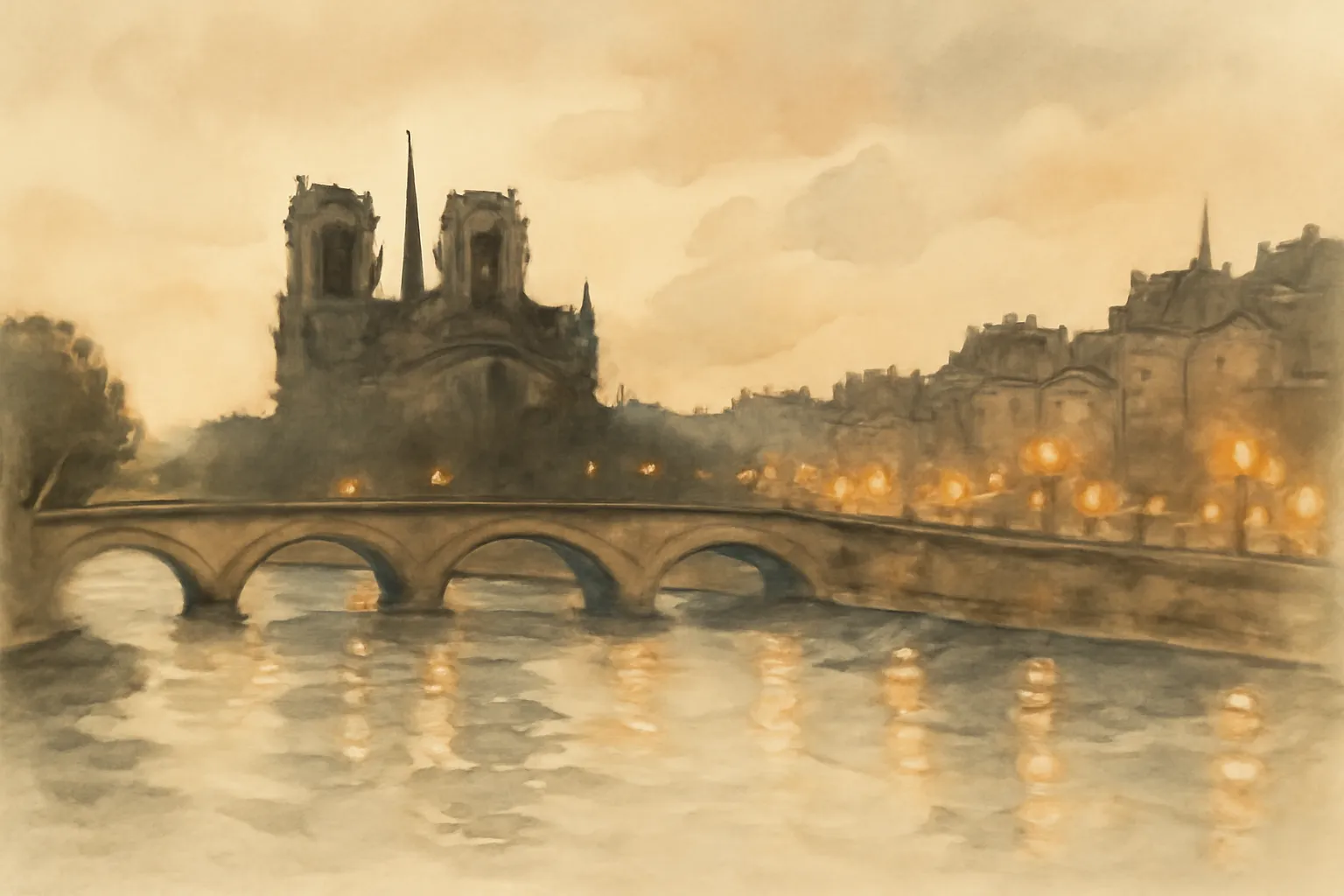
A glimpse inside

Paris, originally known as Lutetia, finds its beginnings in the Gallo-Roman period, where its geographical location played a crucial role in its development. Read moreParis, originally known as Lutetia, finds its beginnings in the Gallo-Roman period, where its geographical location played a crucial role in its development. Situated on an island in the Seine, the city was ideally positioned for trade and defense, attracting early settlers and fostering commerce. The Parisii tribe, who inhabited the area, capitalized on these advantages, establishing a settlement that would evolve into a bustling urban center. The remnants of this period, including Roman ruins and infrastructure, reveal the city’s historical significance as a hub of trade and culture. Okey emphasizes how the foundations laid during this era set the stage for Paris to become a key player in European history, illustrating the importance of geography in the growth of cities. The river Seine served not just as a means of transport but as a lifeline connecting Paris to other regions, facilitating trade routes that enriched both the city and its inhabitants. Show less
As the Roman Empire weakened, Paris faced numerous barbarian invasions that threatened its existence and stability. The conversion of Clovis, the first king of the Franks… Read moreAs the Roman Empire weakened, Paris faced numerous barbarian invasions that threatened its existence and stability. The conversion of Clovis, the first king of the Franks, marked a turning point, as he unified the Frankish tribes and established Paris as a significant political center. Okey highlights the resilience of the city during these tumultuous times, detailing how its strategic location allowed it to withstand various sieges and maintain its status as a key urban center. The rise of Christianity, with figures like St. Genevieve, played a pivotal role in not only maintaining morale but also in shaping the cultural landscape of Paris. This era of strife ultimately laid the groundwork for the Merovingian dynasty, showcasing how adversity can lead to transformation and consolidation of power. Clovis's baptism not only solidified his rule but also helped to integrate the Christian faith into the fabric of Parisian society, furthering the city's importance in the Christian world. Show less
Read the full text — free
About the author
Read Thomas Okey's work free on Lumina — the complete text plus an 8-minute summary and key ideas, no account needed