Philosophical Novels · Murder · Fiction
The Stranger by Albert Camus — Summary, Key Ideas & Quotes
1942143 pages✦ 3-min Big ideas★ 4.1 (133)
Rate it
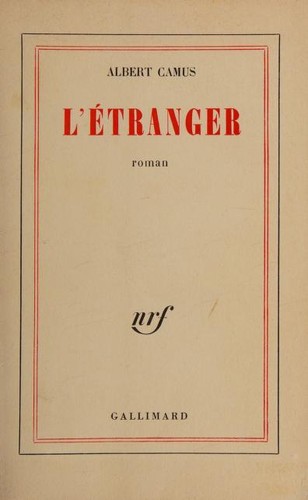
*L'Étranger* est le premier roman publié d’Albert Camus, paru en 1942. Il prend place dans la tétralogie que Camus nommera « cycle de l’absurde » qui décrit les fondements de la philosophie camusienne : l’absurde. Le roman a été traduit en soixante-huit langues.
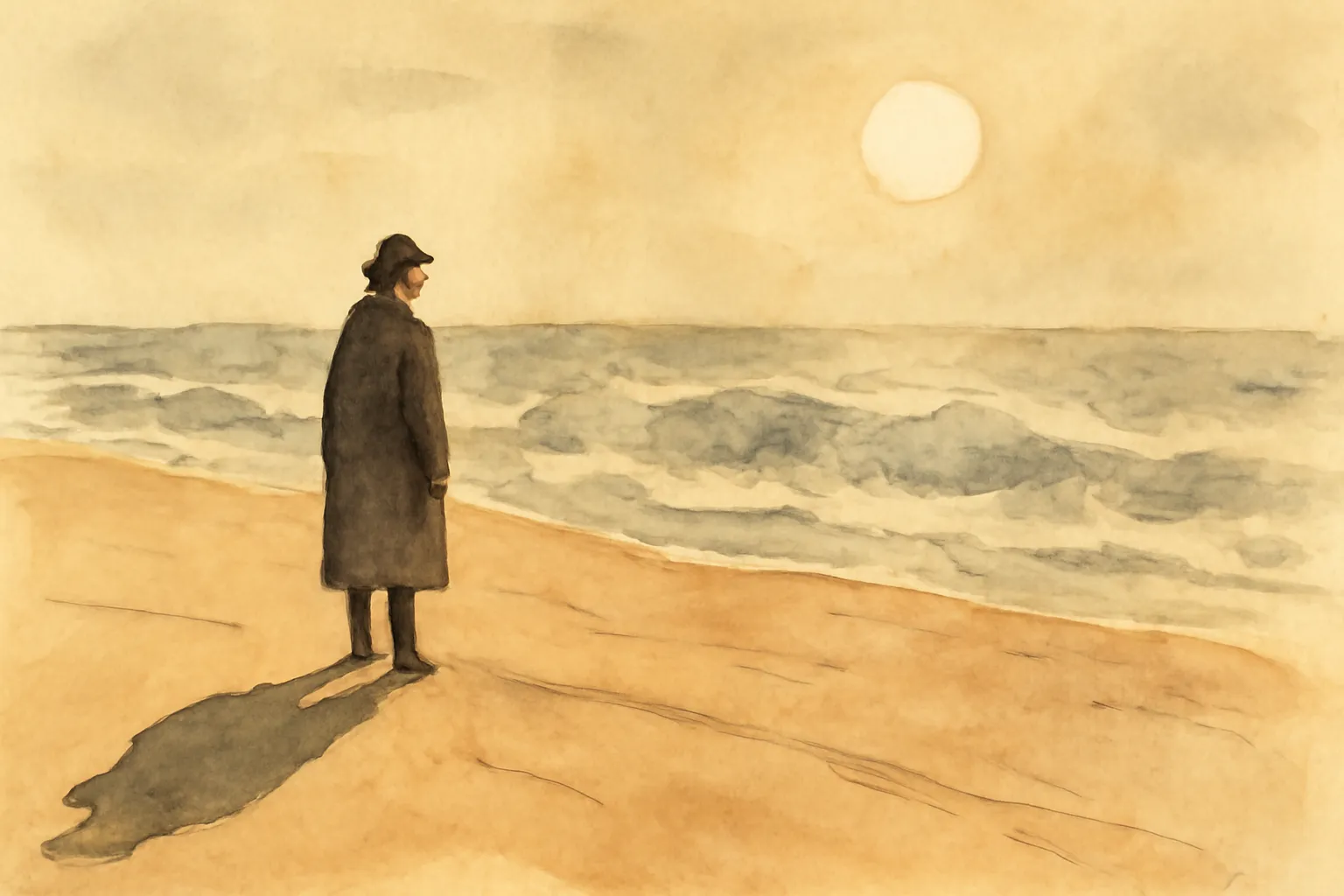
At the heart of The Stranger is the concept of the absurd—the conflict between humans’ desire for meaning and the silent, indifferent universe. Meursault, the protagonist, lives without seeking deeper purpose or rationalizing his experiences. His emotional detachment and lack of conventional grief or ambition highlight how arbitrary and constructed much of human meaning can be. Camus uses Meursault to illustrate that, in an absurd world, traditional values and explanations often fail to resonate, forcing us to confront the void head-on.
Meursault’s indifference alienates him from society. His inability—or refusal—to feign emotions at his mother’s funeral or to justify his actions in socially acceptable terms makes him a stranger to those around him. The novel critiques how society judges individuals not just for their actions, but for their conformity to emotional and moral norms. Camus exposes the discomfort and even hostility that arises when someone refuses to play by these unwritten rules.
“Aujourd'hui, maman est morte. Ou peut-être hier, je ne sais pas.”
“Il n'y avait rien de changé.”
“J'ai compris que j'avais été heureux, et que je l'étais encore.”