

Human evolution · Archaeology · Life Sciences - Evolution
The Wisdom of the Bones by Alan Walker and Pat Shipman — Summary, Key Ideas & Quotes
1997353 pages✦ 3-min Big ideas
Rate it
"Fascinating. . . . As engaging an explanation of how scientists study fossil bones as any I have ever read." --John R. Alden, Philadelphia Inquirer In 1984 a team of paleoanthropologists on a dig in northern Kenya found something extraordinary: a nearly complete skeleton of Homo erectus, a creature that lived 1.5 million years ago and is widely thought to be the missing link between apes and humans. The remains belonged to a tall, rangy adolescent male. The researchers called him "Nariokotome boy." In this immensely lively book, Alan Walker, one of the lead researchers, and his wife and fellow scientist Pat Shipman tell the story of that epochal find and reveal what it tells us about our earliest ancestors. We learn that Nariokotome boy was a highly social predator who walked upright but lacked the capacity for speech. In leading us to these conclusions, The Wisdom of the Bones also offers an engaging chronicle of the hundred-year-long search for a "missing link," a saga of folly, heroic dedication, and inspired science. "Brilliantly captures [an] intellectual odyssey. . . . One of the finest examples of a practicing scientist writing for a popular audience." --Portland Oregonian "A vivid insider's perspective on the global efforts to document our own ancestry." --Richard E. Leakey
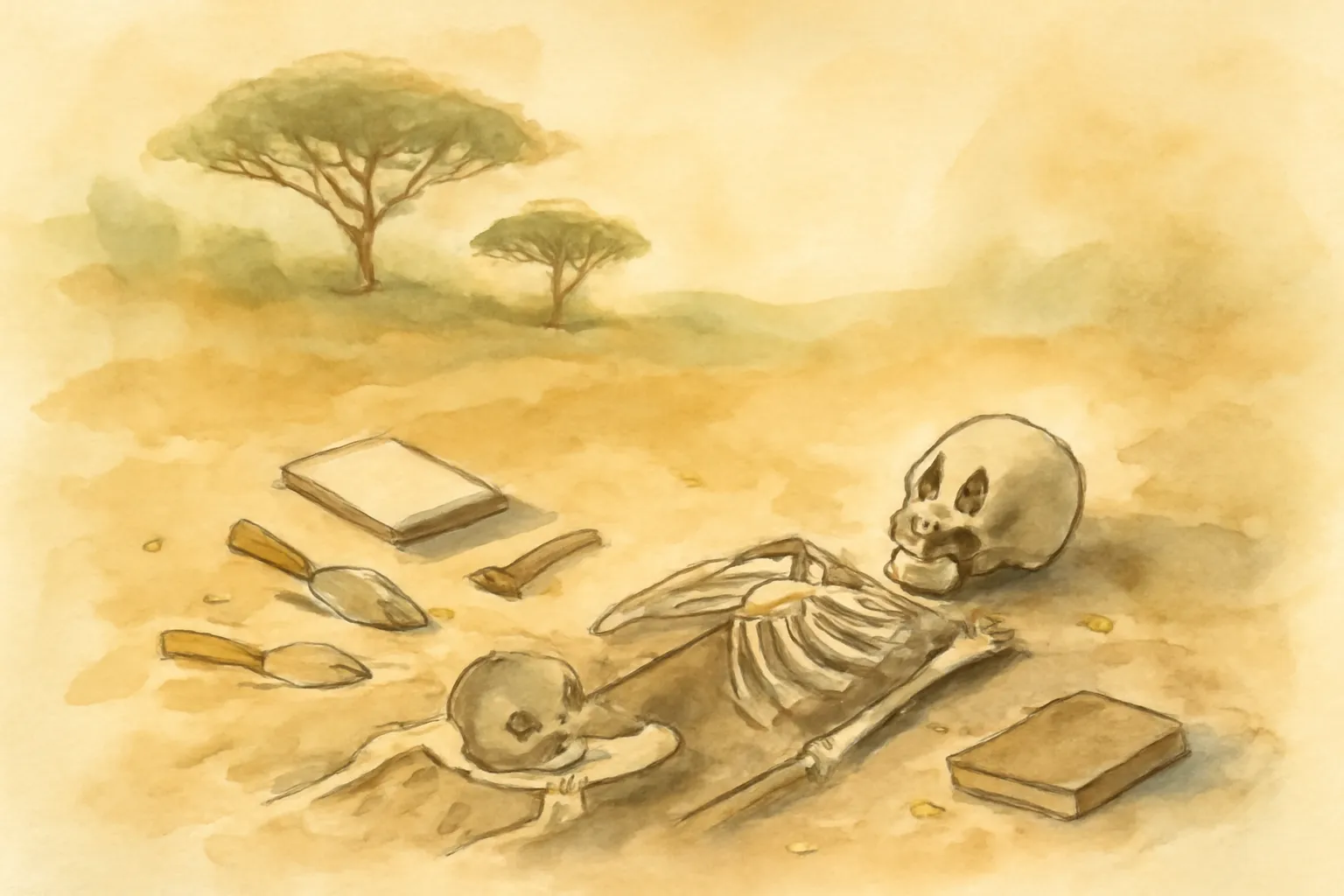
At the heart of the book is the 1984 discovery of the Nariokotome Boy, the most complete early human skeleton ever found. Walker and Shipman detail how this adolescent Homo erectus specimen revolutionized our understanding of early humans—offering direct evidence of stature, growth, and development. The find allowed scientists to move beyond fragments and conjecture, providing a nearly full picture of an individual who lived 1.5 million years ago. This skeleton became a touchstone for debates about what makes us human and how our ancestors lived and evolved.
Walker and Shipman demystify paleoanthropology, showing it as a blend of painstaking fieldwork, lab analysis, and creative hypothesis. The book is as much about the process of science—false leads, rivalries, and the gradual accumulation of evidence—as it is about the fossil itself. Readers see how scientists build narratives from scattered clues, and how new discoveries can overturn decades of accepted wisdom. The authors invite readers to appreciate the rigor, uncertainty, and excitement of scientific discovery.
