Marathon running · Japanese Authors · Biography
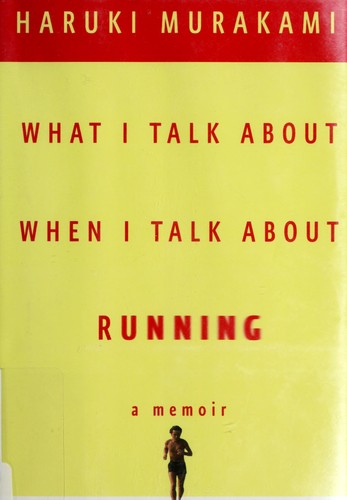
What I Talk About When I Talk About Running by Haruki Murakami — Summary, Key Ideas & Quotes
2006192 pages✦ 3-min Big ideas★ 3.9 (41)
Rate it
In 1982, having sold his jazz bar to devote himself to writing, Murakami began running to keep fit. A year later, he'd completed a solo course from Athens to Marathon, and now, after dozens of such races, not to mention triathlons and a dozen critically acclaimed books, he reflects upon the influence the sport has had on his life and--even more important--on his writing.Equal parts training log, travelogue, and reminiscence, this revealing memoir covers his four-month preparation for the 2005 New York City Marathon and takes us to places ranging from Tokyo's Jingu Gaien gardens, where he once shared the course with an Olympian, to the Charles River in Boston among young women who outpace him. Through this marvelous lens of sport emerges a panorama of memories and insights: the eureka moment when he decided to become a writer, his greatest triumphs and disappointments, his passion for vintage LPs, and the experience, after fifty, of seeing his race times improve and then fall back.By turns funny and sobering, playful and philosophical, What I Talk About When I Talk About Running is rich and revelatory, both for fans of this masterful yet guardedly private writer and for the exploding population of athletes who find similar satisfaction in running.From the Hardcover edition.
Murakami draws a clear parallel between the solitary, repetitive discipline of long-distance running and the daily grind of writing novels. Both require perseverance, self-motivation, and a willingness to endure discomfort for the sake of a larger goal. He suggests that the habits and mindset he cultivates as a runner—patience, resilience, and acceptance of pain—are essential to his life as a writer. Through this lens, running becomes not just exercise, but a metaphor for creative endurance.
The memoir emphasizes the importance of routine, both in running and in writing. Murakami describes his daily schedules, his commitment to running even when he doesn’t feel like it, and how this discipline spills over into his work as an author. He argues that talent alone is not enough; sustained effort, built through daily habits, is what leads to meaningful achievement. This idea challenges the romantic notion of the 'inspired' artist, instead highlighting the unglamorous work behind success.
“Pain is inevitable. Suffering is optional.”
“Most of what I know about writing I’ve learned through running every day.”
“I just run. I run in a void. Or maybe I should put it the other way: I run in order to acquire a void.”