Self-actulaization (Psychology) · Fiction · Miscellanea
Kafka on the Shore by Haruki Murakami — Summary, Key Ideas & Quotes
2001576 pages✦ 3-min Big ideas★ 4.0 (93)
Rate it
A boy trying to escape a gruesome oedipedal prophecy, a simple man who can talk to cats, a mysterious librarian, and a woman waiting for a long-dead lover.
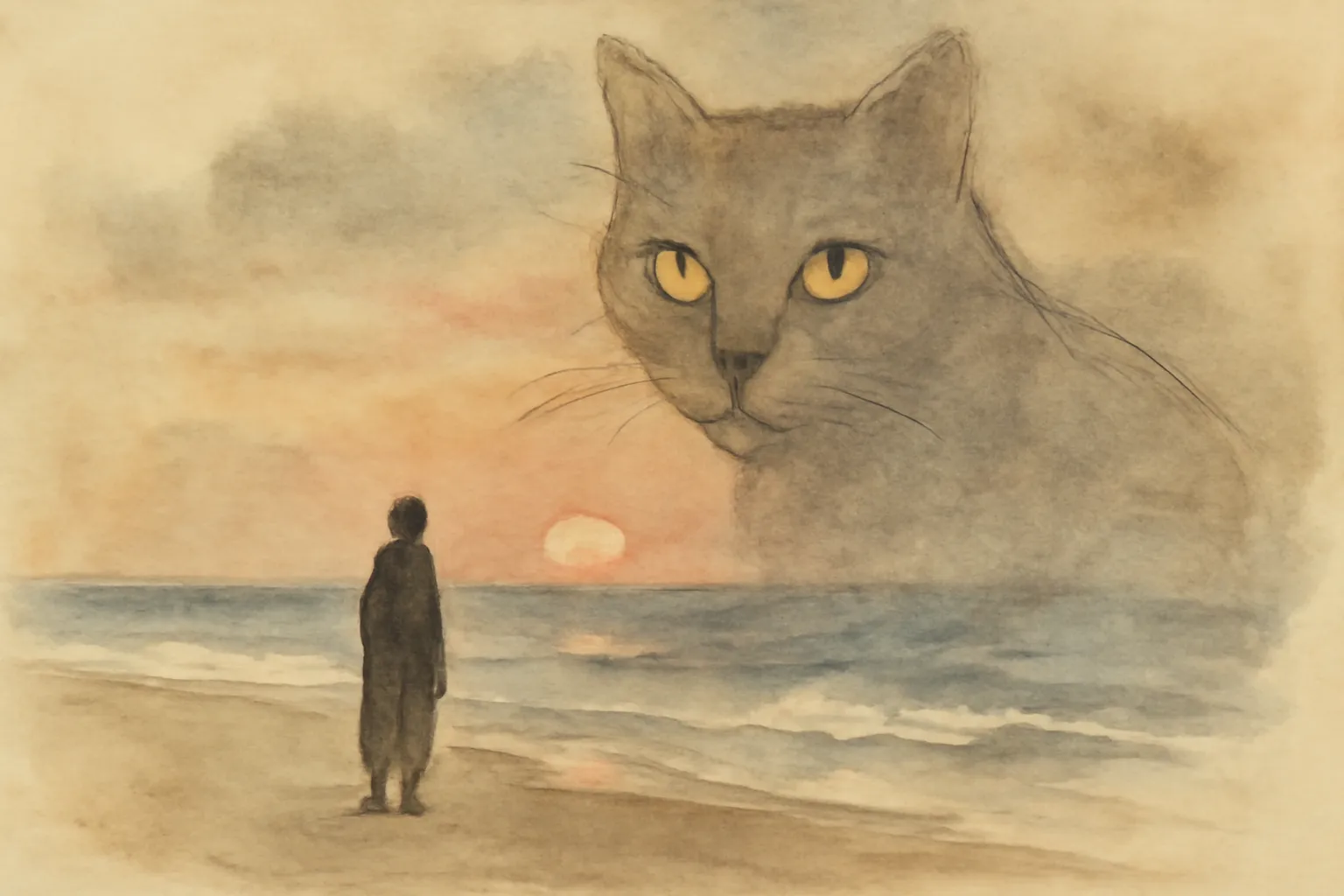
At its heart, Kafka on the Shore is a coming-of-age story, but one that explodes traditional boundaries. Kafka Tamura’s flight from home is not just physical but existential: he is haunted by a prophecy and seeks to define himself outside of his father’s shadow. The novel explores how identity is shaped by memory, trauma, and the stories we tell ourselves. Kafka’s journey is both literal and metaphorical, inviting readers to consider how we construct who we are, and whether we can ever truly escape our past.
Murakami blurs the line between dream and reality, making the unconscious mind a major character in the novel. Characters experience visions, talk to cats, and encounter supernatural phenomena that defy explanation. This surrealism isn’t just for atmosphere—it’s a way of exploring how our deepest fears, desires, and memories shape our actions. The book suggests that the unconscious is not just a hidden realm, but a force that can alter reality itself.
“Memories warm you up from the inside. But they also tear you apart.”
“If you remember me, then I don't care if everyone else forgets.”
“Sometimes fate is like a small sandstorm that keeps changing directions.”