1.The Karamazov Family Dynamics
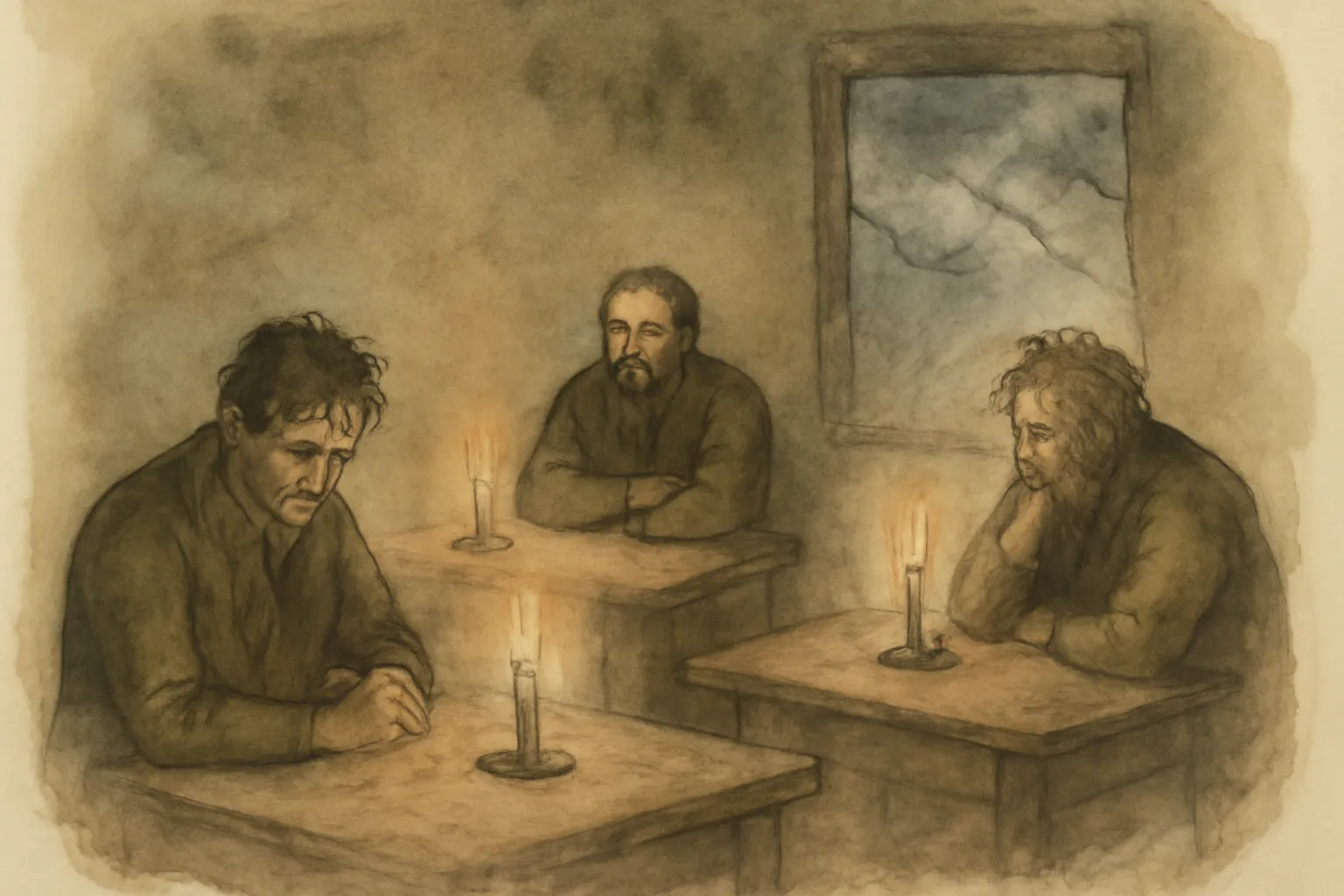
The Karamazov family serves as a microcosm of societal conflicts and moral dilemmas. Fyodor Pavlovitch Karamazov, the patriarch, is depicted as a debauched and neglectful father whose selfishness and moral turpitude set the stage for the brothers' struggles. Dmitri, the eldest son, embodies passion and impulsiveness, often caught in a battle between his desires and a sense of duty. Ivan, the intellectual middle brother, wrestles with existential questions and the problem of evil, while Alyosha, the youngest, symbolizes faith and compassion. Each brother's relationship with their father and each other reveals the complexities of familial loyalty, love, and betrayal, ultimately illustrating how their individual paths are inextricably linked to their shared lineage.
2.The Search for Faith
A central theme in The Brothers Karamazov is the quest for faith amidst doubt and despair. Each brother's journey reflects different approaches to spirituality and belief. Alyosha, the monk-in-training, represents a sincere and unwavering faith, seeking solace in the teachings of his mentor, Father Zossima. In contrast, Ivan's skepticism leads him to question the existence of God in light of human suffering, culminating in his famous 'Rebellion' chapter where he grapples with the moral implications of divine justice. This philosophical discourse raises poignant questions about the nature of faith: is it a choice or an innate understanding? Dostoevsky encourages readers to examine their own beliefs and the profound impact of faith on human experience.
3.The Problem of Evil
Dostoevsky delves deep into the problem of evil, particularly through Ivan's character, who challenges the notion of a benevolent God in a world filled with suffering. Ivan's 'Grand Inquisitor' parable highlights the moral conflict between freedom and authority, suggesting that humanity often prefers comfort over the burden of free will. This raises critical questions: Is faith truly liberating, or does it impose restrictions? The brothers' contrasting responses to the existence of evil reflect broader societal debates about morality, justice, and the role of religion in addressing human suffering. By exploring these themes, Dostoevsky invites readers to confront their own understanding of good and evil, encouraging a deeper reflection on the human condition.
4.The Role of Women
Women in The Brothers Karamazov play a significant yet complex role, highlighting themes of love, sacrifice, and moral ambiguity. Characters like Grushenka and Katerina Ivanovna embody the struggles of desire and virtue, representing the dual nature of femininity in a patriarchal society. Grushenka, initially portrayed as a seductress, reveals deeper layers of vulnerability and longing for redemption, while Katerina's devotion to Dmitri showcases the theme of self-sacrifice. The interactions between the brothers and these women illuminate the tensions between male ambition and female compassion, ultimately questioning societal expectations of gender roles. Through these characters, Dostoevsky examines the moral complexities of love and the impact of women on the lives of men.
5.The Influence of Russian Orthodoxy
Russian Orthodoxy significantly influences the narrative and characters in The Brothers Karamazov, providing a spiritual framework through which the characters navigate their moral dilemmas. Father Zossima embodies the ideal of Christian love and forgiveness, advocating for compassion towards others, including one's enemies. His teachings resonate with Alyosha, who seeks to embody these values in his interactions with his brothers and others. The contrast between Zossima's teachings and the brothers' struggles reflects the broader tensions within Russian society, where traditional religious values clash with emerging secular ideologies. Dostoevsky's exploration of Orthodoxy not only serves as a moral compass for the characters but also invites readers to reflect on the relevance of faith in contemporary life.
6.The Nature of Free Will
Free will is a pivotal concept in The Brothers Karamazov, particularly in how it influences the characters' choices and moral responsibilities. Ivan's philosophical explorations challenge the idea of predestination, arguing that free will is inherently tied to human suffering and the consequences of one's actions. Dmitri's tumultuous life choices exemplify the struggle between desire and ethical responsibility, leading him to confront the repercussions of his decisions. Meanwhile, Alyosha's faith in the goodness of humanity suggests that free will can lead to redemption and love. Dostoevsky invites readers to ponder the implications of free will in their own lives, emphasizing that true freedom comes with the weight of responsibility and moral accountability.
7.The Quest for Redemption
Redemption is a recurring motif throughout The Brothers Karamazov, particularly illustrated through the character arcs of Dmitri and Alyosha. Dmitri's journey is marked by a search for forgiveness and understanding, as he grapples with his past transgressions and the impact of his desires. His eventual recognition of his flaws and his plea for redemption resonate with the novel's overarching theme of moral awakening. Alyosha, in contrast, embodies the idea of redemption through love and compassion, striving to bring healing to his fractured family. Dostoevsky suggests that redemption is attainable through sincere repentance and an unwavering commitment to love, encouraging readers to reflect on their own paths toward forgiveness and reconciliation.
8.The Complexity of Human Relationships
The Brothers Karamazov intricately weaves the complexities of human relationships, exploring themes of love, jealousy, and rivalry. The dynamic between the Karamazov brothers is fraught with tension, as each grapples with their feelings towards their father and each other. Dmitri's intense rivalry with Ivan over Grushenka exemplifies the destructive nature of jealousy, while Alyosha's role as a peacemaker highlights the possibility of reconciliation. The relationships between the brothers, as well as their interactions with women and authority figures, reveal the multifaceted nature of love and the impact of familial bonds on personal identity. Dostoevsky's portrayal of these relationships encourages readers to consider the intricate web of connections that shape human experience.
9.The Legacy of Smerdyakov
Smerdyakov, the illegitimate son of Fyodor Pavlovitch, serves as a crucial figure in The Brothers Karamazov, embodying themes of manipulation, resentment, and existential despair. His complex relationship with the Karamazov family highlights the consequences of neglect and the quest for identity. Smerdyakov's actions raise questions about morality and accountability, particularly in relation to his role in the father’s murder. His philosophical musings on free will and fate reflect Ivan's own struggles, blurring the lines between victim and perpetrator. Through Smerdyakov, Dostoevsky illustrates the dark side of human nature and the potential for evil that resides within us all, prompting readers to confront uncomfortable truths about morality and the human psyche.