1.The Burden of Isolation
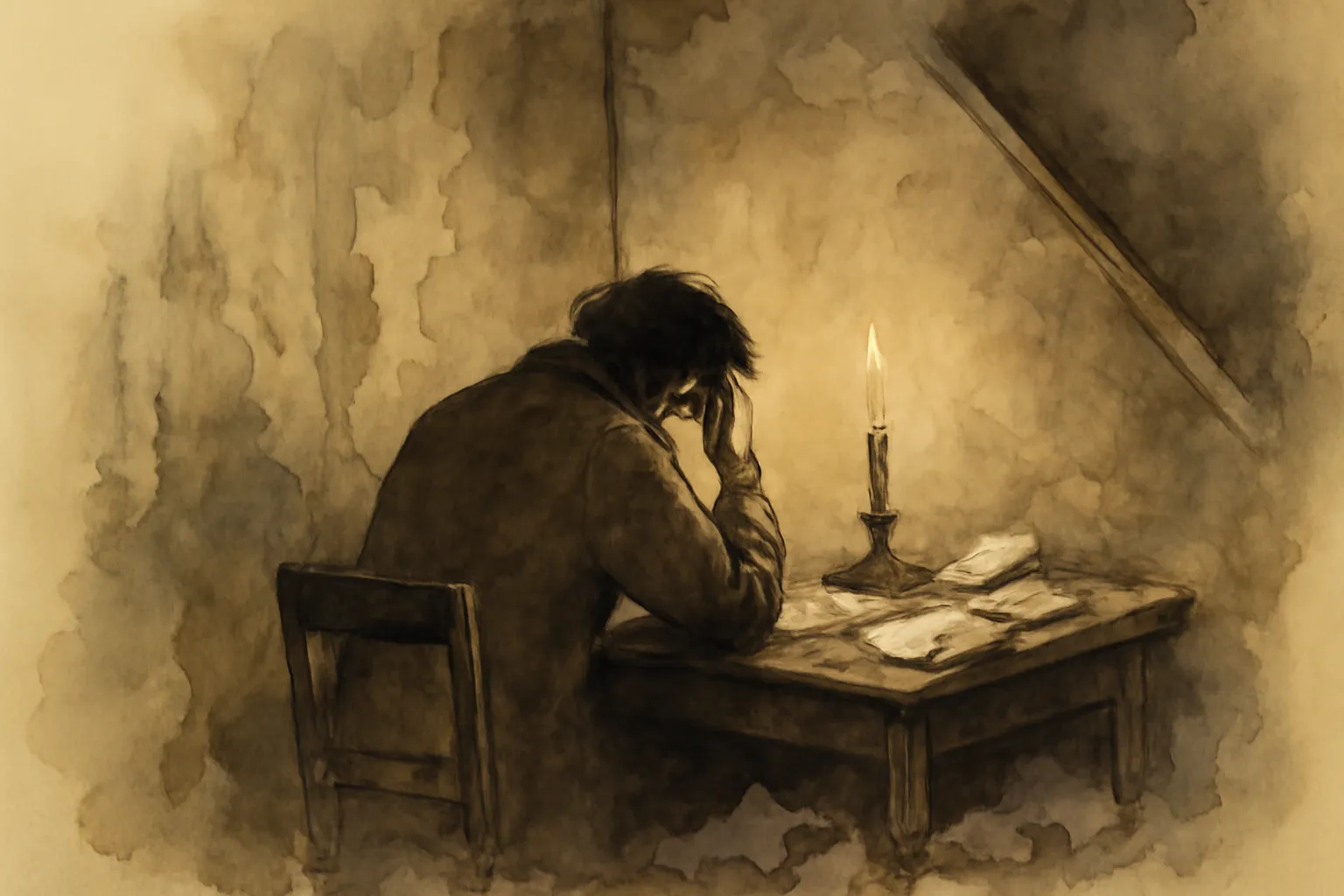
Raskolnikov's initial isolation is a crucial aspect of his character, reflecting his deep-seated alienation from society. Living in a cramped, squalid garret, he avoids interactions, even with his landlady, who represents the mundane world he despises. This self-imposed solitude exacerbates his mental state, leading him to develop a skewed worldview where he believes he is above conventional morality. Dostoevsky illustrates how isolation can distort one's perception of reality, as Raskolnikov's detachment fuels his radical ideas about superiority and the justification of crime. His sense of being an outsider ultimately drives him to commit murder, believing that extraordinary individuals can transcend moral laws for a greater purpose. This theme serves as a cautionary tale about the dangers of withdrawing from human connection and the resultant moral decay.
2.The Philosophy of the Extraordinary Man
Raskolnikov's theory that certain individuals, whom he terms 'extraordinary men,' have the right to commit crimes for a higher cause is central to the narrative. He rationalizes that figures like Napoleon could transgress moral boundaries if their actions lead to progress or benefit humanity. This philosophical framework is put to the test when he murders the pawnbroker, Alyona Ivanovna, whom he perceives as a parasite on society. However, the aftermath of the crime reveals the fragility of his justification; rather than feeling empowered, he is consumed by guilt and paranoia. Dostoevsky critiques this utilitarian perspective by showcasing the psychological torment that follows Raskolnikov's actions, illustrating that the burden of guilt cannot be easily absolved by intellectual reasoning. His internal conflict raises profound questions about the validity of moral relativism and the inherent value of human life.
3.The Role of Suffering
Suffering is a recurring motif throughout Crime and Punishment, serving as both a punishment for sin and a pathway to redemption. Raskolnikov's torment after the murder manifests in physical and mental anguish, highlighting the inescapable nature of guilt. Dostoevsky suggests that suffering can lead to spiritual awakening and moral clarity, as seen in characters like Sonia, who endures her own trials yet maintains her faith and compassion. Sonia's unwavering support for Raskolnikov contrasts with his own self-imposed suffering, emphasizing that true redemption comes not through isolation but through connection with others. The novel posits that embracing suffering can lead to personal transformation, urging readers to confront their own moral failings and seek forgiveness. This exploration of suffering as a transformative force underscores the complexity of human experience and the potential for growth in the face of despair.
4.The Intersection of Redemption and Forgiveness
Redemption in Crime and Punishment is intricately tied to the themes of forgiveness and the power of human connection. Raskolnikov's journey is marked by his struggle to seek forgiveness for his crime, which he ultimately finds through his relationship with Sonia. Her unconditional love and acceptance serve as a catalyst for his moral awakening, illustrating that redemption is not a solitary pursuit but often requires the compassion of others. Dostoevsky emphasizes the importance of community and empathy in the process of healing, as Raskolnikov learns that true redemption comes from acknowledging one's wrongdoings and seeking to make amends. This theme resonates with the broader human experience, suggesting that we are all capable of redemption through love and forgiveness, regardless of our past actions. The novel thus becomes a powerful exploration of the interconnectedness of humanity and the transformative power of compassion.
5.The Nature of Guilt and Conscience

Dostoevsky masterfully delves into the complexities of guilt and conscience, portraying them as inescapable aspects of the human condition. After committing murder, Raskolnikov is plagued by his conscience, leading to a profound internal struggle that manifests in paranoia and hallucinations. His guilt becomes a character in itself, haunting him and driving him to irrational behavior, such as his erratic interactions with others and his obsessive thoughts about the crime. The novel illustrates how guilt can distort one's perception of reality, leading to a fragmented psyche. Raskolnikov's eventual confession signifies a turning point, suggesting that confronting one's guilt is essential for healing. Dostoevsky argues that the weight of conscience is a universal human experience, one that can lead to self-destruction if left unacknowledged. Through Raskolnikov's journey, readers are compelled to reflect on their own moral choices and the consequences they bear.
6.The Search for Identity
Raskolnikov's struggle with his identity is a central theme in the narrative, as he grapples with conflicting aspects of himself. He oscillates between the persona of the 'extraordinary man' and the guilt-ridden murderer, unable to reconcile these identities. This conflict reflects a broader existential crisis, as Raskolnikov questions his place in the world and the meaning of his existence. Dostoevsky uses Raskolnikov's journey to explore the search for identity in a rapidly changing society, where traditional values are being challenged. The character's ultimate realization that he cannot escape his humanity serves as a poignant reminder of the importance of self-acceptance and the need for genuine connections with others. This exploration of identity resonates with readers, prompting them to consider their own struggles with self-perception and the societal pressures that shape their lives.
7.The Impact of Poverty

Poverty plays a critical role in shaping the characters and events of Crime and Punishment, serving as both a backdrop and a catalyst for Raskolnikov's actions. The squalid conditions of St. Petersburg reflect the moral decay of society, where desperation drives individuals to commit unspeakable acts. Raskolnikov's own financial struggles contribute to his feelings of alienation and hopelessness, leading him to rationalize murder as a means to an end. Dostoevsky poignantly illustrates how poverty can strip individuals of their humanity, forcing them into a survival mentality that justifies immoral behavior. The novel invites readers to consider the broader societal implications of poverty, challenging them to empathize with those who are marginalized and to reflect on the systemic issues that perpetuate inequality. Through Raskolnikov's journey, Dostoevsky critiques the indifference of society towards the impoverished and urges a more compassionate understanding of their plight.
8.The Role of Women

The female characters in Crime and Punishment serve as pivotal figures who illuminate the moral complexities of the male protagonist's journey. Sonia, in particular, embodies the themes of sacrifice, compassion, and redemption, contrasting sharply with Raskolnikov's nihilism. Her strength and resilience in the face of adversity highlight the potential for moral integrity in a corrupt world. Dostoevsky presents women as the moral compass of the narrative, guiding Raskolnikov towards redemption through their unwavering support and love. The portrayal of characters like Dounia and Katerina Ivanovna further emphasizes the struggles women face in a patriarchal society, revealing their strength and agency despite their circumstances. This nuanced representation of women challenges traditional gender roles and underscores the importance of female perspectives in the exploration of morality and human connection. Through these female characters, Dostoevsky enriches the narrative, illustrating the profound impact of love and compassion on the journey towards redemption.
9.The Influence of Religion and Faith

Religion and faith are woven throughout Crime and Punishment, providing a framework for understanding Raskolnikov's moral dilemmas and ultimate quest for redemption. The character of Sonia embodies a Christ-like figure, representing hope and forgiveness in a world steeped in despair. Her unwavering faith serves as a counterbalance to Raskolnikov's nihilism, illustrating the transformative power of belief. Dostoevsky explores the tension between rationality and faith, as Raskolnikov grapples with his atheistic beliefs in the face of his guilt. The novel suggests that faith can provide solace and guidance in moments of existential crisis, urging readers to consider the role of spirituality in their own lives. Raskolnikov's eventual reconciliation with his faith signifies a critical turning point in his journey, highlighting the importance of belief in the pursuit of redemption. Through this exploration of religion, Dostoevsky invites readers to reflect on their own spiritual beliefs and the moral implications of their actions.
10.The Complexity of Human Nature
Crime and Punishment presents a multifaceted exploration of human nature, revealing the contradictions and complexities that define the human experience. Raskolnikov is both a sympathetic character and a morally reprehensible individual, embodying the duality of human existence. Dostoevsky delves into the depths of Raskolnikov's psyche, illustrating how one's circumstances, beliefs, and emotions can lead to both noble and heinous actions. The novel challenges readers to confront their own moral ambiguities, emphasizing that individuals are not easily categorized as purely good or evil. This nuanced portrayal of human nature encourages empathy and understanding, urging readers to recognize the shared struggles and complexities that unite us all. By presenting characters with conflicting motivations and moral dilemmas, Dostoevsky invites a deeper reflection on the nature of humanity and the choices that define us.