1.The Power of Observation
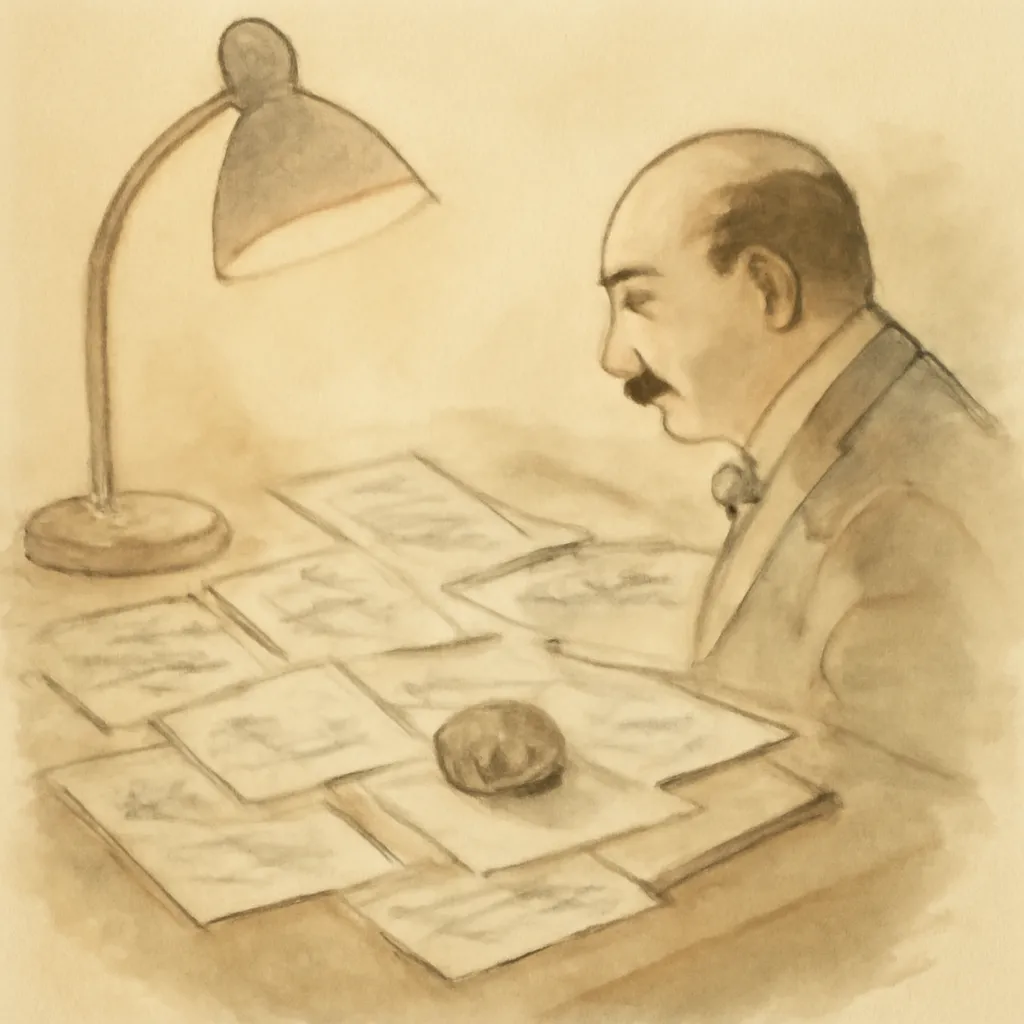
Poirot’s success as a detective hinges on his unparalleled powers of observation. Unlike traditional detectives who may rely on brute force or intuition, Poirot meticulously examines every detail of the crime scene, from the positions of coffee cups to the smallest fragments of fabric. This approach underscores a key theme in the book: the importance of seeing what others overlook. For instance, when Poirot notes the missing coffee cup that should belong to Mr. Inglethorp, he demonstrates how even the tiniest discrepancies can unravel a larger mystery. His methodical nature contrasts sharply with the emotional responses of the other characters, emphasizing that clarity of thought is crucial in solving complex problems.
2.Family Dynamics and Hidden Motives
The relationships within the Cavendish family illustrate the complexities of familial bonds and hidden motives. Mrs. Inglethorp, the wealthy matriarch, is characterized by her autocratic demeanor and the way her wealth affects those around her. The tension between her and her stepsons, John and Lawrence, reveals deep-seated resentments that have festered over the years. John's apparent loyalty is complicated by his financial dependence on his mother, while Lawrence’s delicate health and emotional fragility make him vulnerable to manipulation. These dynamics set the stage for a murder that is not just a crime of passion but also a culmination of long-standing grievances. The interplay of love, jealousy, and greed among family members serves as a reminder that the most dangerous conflicts often arise within the home.
3.The Role of Gender and Power
Christie deftly navigates themes of gender and power through the character of Mrs. Inglethorp and her influence over the men in her life. She wields her wealth and authority unapologetically, which creates a sense of unease among her family. The men, particularly her husband Alfred Inglethorp, are portrayed as weak and subservient, further emphasizing her dominant role. This power imbalance raises questions about masculinity and femininity in the early 20th century, suggesting that women can be just as ruthless and cunning as their male counterparts. Through her character, Christie critiques societal norms that dictate how women should behave while showcasing the lengths to which individuals will go to maintain control over their lives and those around them.
4.The Nature of Evil
The novel invites readers to ponder the nature of evil and the motivations behind murder. As Poirot explores the backgrounds of the suspects, he unveils layers of deceit and betrayal that paint a complex picture of morality. Each character exhibits traits that could lead them to commit murder, but the true nature of evil is not simply about the act itself—it is about the motivations that drive individuals to such extremes. By placing the focus on psychological motivations rather than just the physical act of killing, Christie encourages readers to consider the darker aspects of the human condition. The exploration of what compels a person to commit murder challenges the binary notion of good versus evil, suggesting that everyone is capable of darkness under the right circumstances.
5.The Art of Deception
Deception plays a pivotal role in the unfolding mystery, with characters employing various tactics to mislead both each other and the investigation. Mrs. Inglethorp’s own machinations, as well as those of her family members, create a labyrinth of lies that Poirot must navigate. The tension between appearance and reality is a recurring theme, as characters often present one face to the world while hiding their true intentions. Poirot’s ability to sift through these layers of deception allows him to uncover the truth, but it also serves as a cautionary tale about the dangers of deceit. The novel illustrates how lies can entrap individuals, leading to disastrous consequences not only for the victim but also for the perpetrators who become ensnared in their own webs of deceit.
6.Justice and Moral Ambiguity
As the investigation unfolds, questions of justice and morality come to the forefront. Poirot's ultimate goal is to ensure that the truth is revealed, but the implications of that truth challenge conventional notions of justice. The characters’ motivations blur the lines between right and wrong, raising the question of whether justice is truly served when the murderer is revealed. In the case of John Cavendish, for example, the court of public opinion may view him as guilty, but Poirot's insights suggest a more nuanced understanding of his actions. This moral ambiguity invites readers to reflect on the complexities of justice and whether it can ever truly be achieved in a world filled with imperfect human beings.
7.The Importance of Rationality
Poirot’s rationality serves as a stark contrast to the emotional turmoil of those around him. While the characters are often driven by passion and impulse, Poirot maintains a cool, analytical demeanor that allows him to see the truth amidst chaos. This rational approach not only aids in solving the mystery but also highlights the value of logic in everyday life. In moments of crisis, when emotions run high, the ability to remain calm and think critically can be the difference between clarity and confusion. Christie emphasizes that rationality is not merely a tool for solving crimes but a vital skill for navigating the complexities of human interactions and relationships.
8.The Impact of War on Society
Set against the backdrop of post-World War I England, the novel subtly reflects the societal changes wrought by the war. Characters like Hastings, who has returned from the front, embody the psychological scars and shifting norms of a society grappling with loss and trauma. The war has altered perceptions of class and gender, and Christie captures this shift through the interactions among her characters. The characters’ struggles with identity and purpose echo the broader societal upheaval, reminding readers that the effects of war extend beyond the battlefield. This context enriches the narrative, adding depth to the characters’ motivations and the choices they make, ultimately shaping the course of the story.
9.Poirot's Methodology: The 'Little Grey Cells'
Poirot famously refers to his brain as his 'little grey cells,' emphasizing the importance of mental acuity in solving mysteries. His methodology involves a combination of psychological insight, keen observation, and logical deduction, which he applies systematically to each case. In 'The Mysterious Affair at Styles,' Poirot's approach is showcased through his careful analysis of evidence, interviews with suspects, and the construction of timelines. By demonstrating how he pieces together seemingly unrelated details, Christie illustrates the power of intellect over brute force or luck. Poirot's confidence in his methods serves as an inspiration for readers, encouraging them to trust in their own reasoning abilities and the power of critical thinking.