1.Stepan Trofimovitch: The Persecuted Patriot
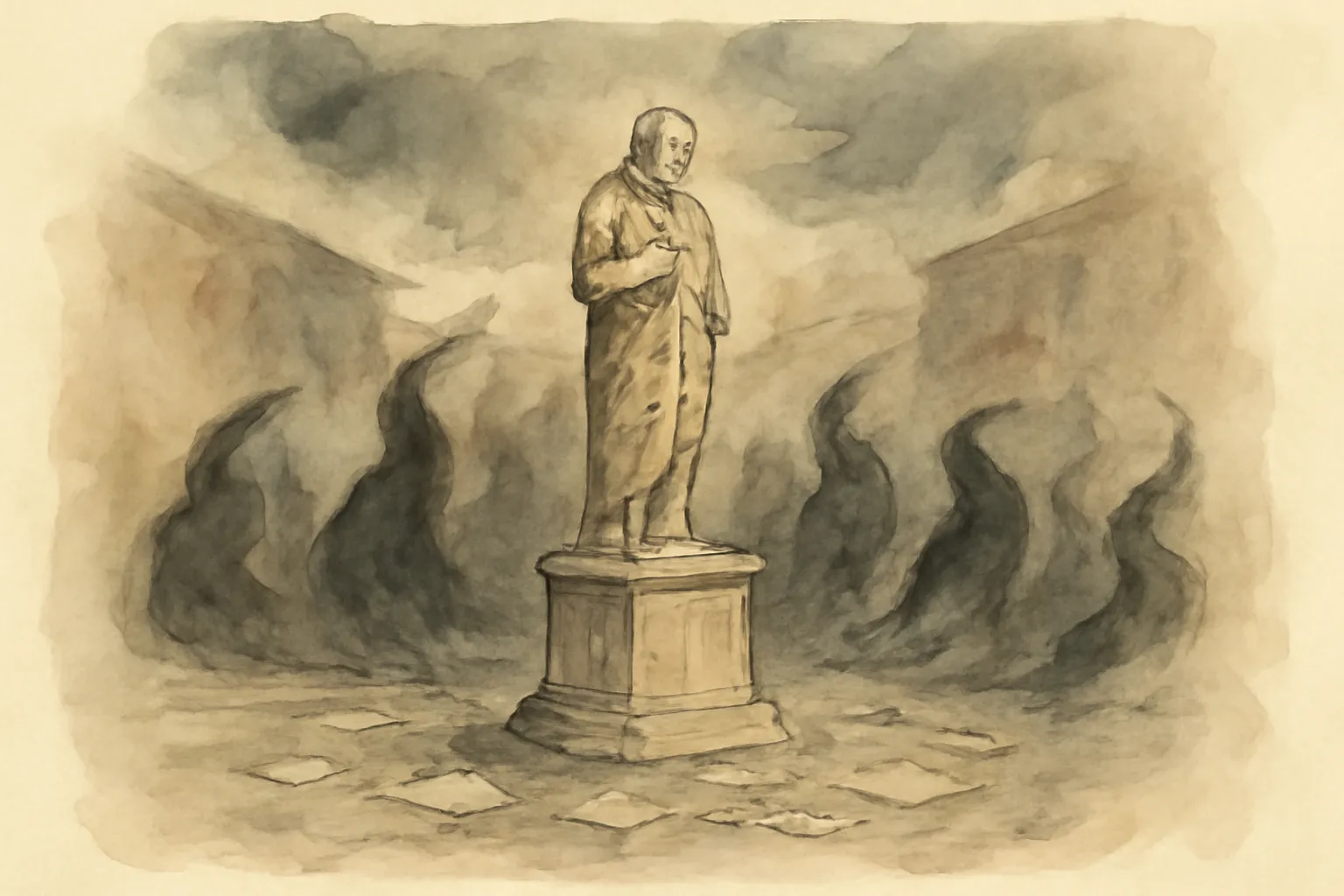
Stepan Trofimovitch Verhovensky serves as a complex embodiment of the 'progressive patriot' archetype. He revels in his role as a 'persecuted' man, allowing his identity to be shaped by a desire for recognition and validation. His self-image is akin to that of Gulliver, who, after returning from Lilliput, believes himself a giant despite being surrounded by ordinary-sized people. This sense of inflated self-worth allows Stepan to navigate his identity within the confines of societal expectations, yet it also highlights the fragility of his position. As he clings to this role, he becomes increasingly disconnected from reality, illustrating how personal delusions can obscure genuine contributions to society. Stepan's character raises critical questions about the nature of patriotism and the motivations behind public personas.
2.The Influence of Parental Relationships
The relationship between Stepan and Nikolay Vsyevolodovitch Stavrogin underscores the profound impact of parental figures on personal development. Stepan, in his role as tutor, forms an emotional bond with young Stavrogin, who grows up largely under his influence. Their relationship blurs the boundaries of mentorship, as Stepan often turns to Nikolay for emotional support, weeping and sharing his innermost feelings. This dynamic illustrates how parental figures can simultaneously nurture and stifle their charges, creating a complex web of dependency. As Nikolay matures, he carries the weight of this emotional upbringing, which contributes to his eventual isolation and moral ambiguity. The novel posits that these formative relationships can have lasting effects, shaping one's worldview and emotional responses to society.
3.The Weight of Shame and Isolation
Shame emerges as a central theme in the lives of several characters, particularly through the lens of Nikolay Stavrogin. His acute sense of shame becomes a debilitating force, isolating him from his peers and preventing him from engaging fully with the world around him. Despite being a figure of considerable strength and potential, he grapples with feelings of inadequacy and self-loathing that compel him to withdraw. This shame is exacerbated by his uncertainty regarding his engagement, which leaves him in a state of limbo, unable to assert his identity or intentions. The narrative portrays shame not merely as a personal failing but as a societal construct that can dictate behavior and relationships. Through Nikolay's struggles, Dostoevsky explores how shame can lead to paralysis in the face of personal and societal challenges.
4.The Role of Women in a Changing Society
The female characters in 'The Possessed' play pivotal roles in shaping the narrative and reflecting the societal attitudes of the time. Figures like Varvara Petrovna and Lizaveta Nikolaevna embody the complexities of womanhood, navigating their desires and societal expectations. Varvara, as a mother and widow, exerts influence over her son while also grappling with her own ambitions and societal standing. Meanwhile, Lizaveta's engagement is marked by a blend of personal agency and societal pressure, illustrating the dual constraints placed on women. Their interactions with male characters reveal the underlying tensions of gender dynamics, as women often find themselves at the mercy of the ambitions and failings of the men around them. Dostoevsky's portrayal of women in this context invites readers to consider the evolving roles of women in society and the implications of their choices amidst societal upheaval.
5.The Nature of Ideological Conflict
The ideological conflicts within the novel serve as a microcosm of the larger societal struggles facing Russia during Dostoevsky's time. Characters like Pyotr Stepanovitch Verhovensky are driven by radical ideas that challenge traditional norms and provoke violent reactions. This clash of ideologies manifests in various forms, from philosophical debates to outright insurrection. The events in the town reflect the tension between progressive thought and conservative values, illustrating how personal beliefs can escalate into public crises. The novel suggests that such ideological battles are not merely abstract concepts but are deeply personal, affecting the lives and relationships of those involved. Dostoevsky's exploration of these conflicts encourages readers to reflect on their own beliefs and the impact of ideology on individual lives.
6.The Fragility of Human Connection
Throughout 'The Possessed', Dostoevsky examines the fragility of human relationships in the face of societal turmoil. Characters often find themselves at odds with one another, driven by personal ambitions and ideological divides. The bonds that should unite them are tested by shame, betrayal, and the weight of unfulfilled desires. For instance, the relationship between Nikolay and Lizaveta becomes strained as external pressures mount, leading to tragic consequences. The novel suggests that in times of crisis, the very connections that define us can become sources of conflict and despair. Dostoevsky’s portrayal of these strained relationships serves as a poignant reminder of the importance of empathy and understanding in navigating the complexities of human interaction.
7.The Consequences of Inaction
Inaction is portrayed as a significant theme in 'The Possessed', particularly through the character of Nikolay. His inability to act decisively in critical moments leads to a cascade of tragic events that ripple through the lives of those around him. This paralysis is not merely a personal failing; it reflects a broader societal malaise where individuals are caught between competing ideologies and personal turmoil. The narrative emphasizes that inaction can be as destructive as overt malevolence, leading to unintended consequences that haunt characters long after the moment has passed. Dostoevsky challenges readers to consider the moral implications of their choices and the importance of taking responsibility for one's actions in the face of societal challenges.
8.The Illusion of Control
The illusion of control is a recurring motif in 'The Possessed', particularly evident in the actions of Pyotr Stepanovitch. He believes he can manipulate events and individuals to achieve his ends, yet this illusion ultimately leads to chaos and disarray. His machinations, driven by ambition and a desire for power, illustrate the hubris that often accompanies attempts to control others. As the narrative unfolds, it becomes clear that the very forces he seeks to harness are beyond his grasp, leading to unforeseen consequences that unravel his plans. Dostoevsky uses this theme to explore the unpredictability of human nature and the futility of trying to impose order on complex social dynamics. The characters' experiences serve as a cautionary tale about the limits of human agency in a world rife with uncertainty.
9.The Search for Meaning in a Chaotic World
In the tumult of 'The Possessed', characters grapple with existential questions and the search for meaning amidst chaos. As societal structures begin to crumble, individuals are left to confront their beliefs and values in a world that seems increasingly devoid of purpose. Nikolay's internal struggle reflects this search for meaning, as he oscillates between despair and a longing for connection. Dostoevsky suggests that in the face of societal upheaval, the quest for meaning becomes a deeply personal journey, one that can lead to both self-discovery and further alienation. The novel invites readers to reflect on their own searches for meaning in a rapidly changing world, highlighting the universal human experience of grappling with existential uncertainty.