1.The Unlikely Detective

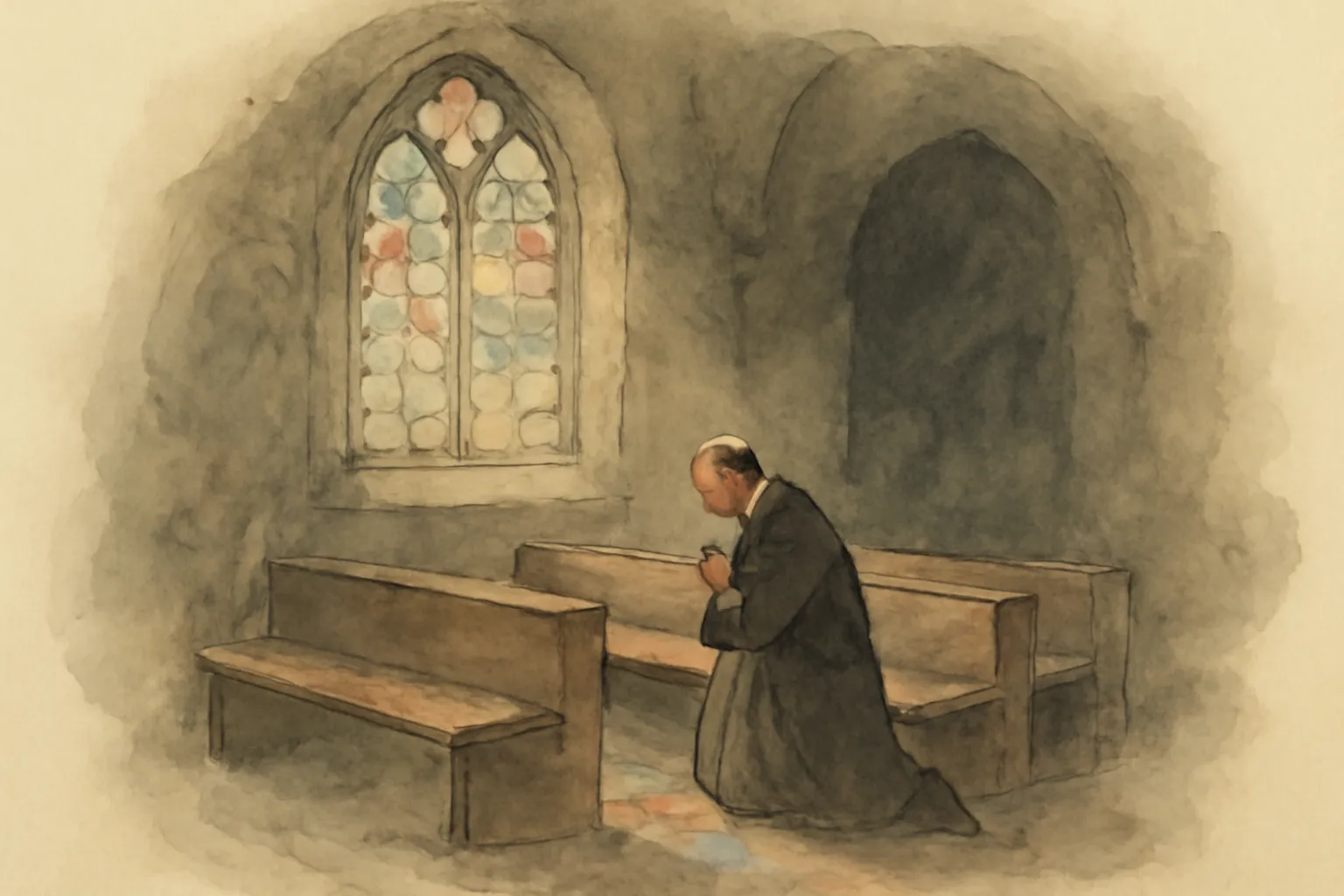
Father Brown, a seemingly simple priest, embodies the idea that true insight comes not from intellect alone but from understanding human nature. His approach to solving crimes is rooted in empathy rather than mere logic. Brown often sees beyond the surface, revealing the motivations and fears that drive individuals to commit crimes. This perspective allows him to connect with both victims and perpetrators, offering a unique vantage point that traditional detectives lack. For instance, in the story where he unravels the blackmail plot involving Mr. Todhunter and Mr. Glass, he attentively analyzes their interactions and deduces that the dynamics at play are far more complex than they appear. This showcases how the priest's understanding of human character often leads him to the truth faster than any forensic detail. Father Brown's character challenges the stereotype of the detective, suggesting that wisdom and compassion can be as powerful as intellect, enabling us to see the truth hidden beneath layers of deceit.
2.Morality and Human Fallibility

The stories in 'The Wisdom of Father Brown' delve into the moral complexities of crime and punishment. Chesterton presents a world where characters are not simply good or evil but often embody shades of gray. This duality is crucial in understanding the motivations behind their actions. For example, the story involving the suspected murderer reveals how desperation can lead otherwise good people into criminal behavior. Father Brown encounters individuals driven by guilt, desperation, or a desire for redemption, illustrating that circumstances often dictate moral choices. His belief that everyone has the potential for redemption shapes his interactions, as he often seeks to understand rather than condemn. This exploration of human fallibility encourages readers to reflect on their own moral judgments and the gray areas of ethics that complicate our understanding of right and wrong. Chesterton's narratives thus challenge the binary thinking that often characterizes discussions of morality.
3.The Role of Faith in Understanding
Father Brown's faith is a guiding compass throughout the stories, influencing his perception of justice and morality. His belief in the inherent goodness of people allows him to approach each mystery with an open heart. This faith is not blind; rather, it is informed by his experiences and understanding of human nature. When confronted with crime, he often seeks to uncover the underlying motivations rather than focus solely on the act itself. In one tale, for example, he empathizes with a character who feels trapped by circumstances, ultimately leading to a resolution that addresses the root of the issue rather than simply punishing the crime. His faith serves as a reminder of the importance of hope and understanding in our interactions with others, particularly in a world where cynicism often prevails. This spiritual dimension adds depth to the character of Father Brown and underscores the book's thematic explorations of morality and redemption.
4.The Complexity of Crime

Chesterton intricately weaves themes of crime and its motivations throughout the tales, suggesting that crime is often a symptom of deeper societal issues. In 'The Wisdom of Father Brown', crime is not an isolated event but rather intertwined with personal and societal struggles. This interconnectedness is exemplified in stories where perpetrators are driven by social pressures, financial desperation, or emotional turmoil. For instance, one character's actions stem from a profound sense of alienation, reflecting larger societal neglect and moral decay. Father Brown recognizes these complexities, emphasizing that understanding the context of a crime is essential for true justice. The priest often goes beyond the act itself to examine the societal conditions that foster such behavior, suggesting that crime should be viewed through a lens that considers both individual choices and broader systemic factors. This nuanced view challenges the conventional notion of crime as merely a legal issue, urging readers to consider the social and psychological factors contributing to criminal behavior.
5.Empathy as a Tool for Justice
Father Brown's empathetic approach to solving crimes emphasizes the need for understanding and compassion in the pursuit of justice. Rather than resorting to harsh judgment, he seeks to comprehend the motivations and emotions of those involved. This method allows him to uncover truths that may be hidden beneath layers of deception and fear. For example, when faced with a character who has committed theft out of necessity rather than greed, Father Brown's empathy enables him to address the underlying issues, leading to a more profound understanding of justice. This reliance on empathy serves as a powerful reminder that justice is not solely about punishment but also about understanding and healing. The stories encourage readers to recognize that human beings are often shaped by their circumstances, prompting introspection about their own biases and judgments toward those who may have erred in their choices.
6.The Power of Observation
A recurring motif in Father Brown's investigations is the significance of keen observation and attention to detail. His ability to notice seemingly insignificant details often leads to breakthroughs in solving mysteries. This skill is not merely about being observant; it involves interpreting those observations within the broader context of human behavior. For instance, by paying attention to the interactions between characters and subtle cues in their demeanor, Father Brown can piece together complex narratives that others overlook. This highlights the importance of mindfulness and awareness in all aspects of life, suggesting that the answers to our questions often lie within our observations of the world around us. In one story, he deduces a key piece of evidence simply by observing how a suspect reacts to a seemingly innocuous question. This underscores the idea that understanding human behavior can often illuminate the path to truth in unexpected ways.
7.The Importance of Redemption
Redemption is a central theme in 'The Wisdom of Father Brown', with many stories exploring the potential for change and forgiveness. Father Brown often encounters individuals who have strayed from the path of morality but still possess the capacity for redemption. His interactions with these characters reveal a belief that it is never too late to seek forgiveness or make amends. In one tale, a character grapples with guilt over past actions, and Father Brown's understanding approach encourages him to confront his demons. This focus on redemption challenges readers to consider their own capacity for forgiveness and the transformative power of compassion. Chesterton’s portrayal of redemption serves as a hopeful message, reinforcing the idea that every individual has the potential to change, regardless of their past actions. This narrative thread invites poignant reflection on the nature of guilt, forgiveness, and the human capacity for growth.
8.The Nature of Evil
Chesterton's exploration of evil in 'The Wisdom of Father Brown' is multifaceted, presenting it as a complex force that often stems from fear, desperation, or misunderstanding. Father Brown recognizes that evil is not an inherent trait but rather a manifestation of deeper issues within individuals and society. This perspective allows him to confront evil with a sense of understanding rather than fear. In one story, he encounters a character whose actions are driven by a desperate need for acceptance, illustrating how societal pressures can lead individuals astray. By examining the roots of evil, Father Brown encourages readers to reflect on the circumstances that foster such behavior, prompting a shift from condemnation to compassion. This nuanced understanding of evil positions it as something that can be confronted and understood, rather than a monolithic force to be simply fought against.
9.The Subversion of Expectations
Many tales in 'The Wisdom of Father Brown' subvert traditional expectations of mystery and detective fiction. Chesterton often leads readers down one path, only to reveal unexpected twists that challenge their assumptions. This narrative technique not only keeps readers engaged but also serves to highlight the complexities of human behavior. Father Brown's insights often defy conventional logic, emphasizing that truth is not always straightforward. For example, a character initially presumed innocent is later revealed to have played a critical role in the crime, illustrating the intricate dance between appearance and reality. This unpredictability mirrors real life, where motivations and outcomes are rarely clear-cut. By subverting expectations, Chesterton invites readers to embrace uncertainty and consider the multifaceted nature of truth, ultimately suggesting that our assumptions can often blind us to deeper realities.
10.The Interplay of Science and Faith
Chesterton crafts a dialogue between science and faith throughout the stories, often pitting Father Brown against more empirical characters like Dr. Hood. This interplay raises questions about the limits of rationality and the role of intuition in understanding human behavior. While science seeks to quantify and categorize, Father Brown's faith-based approach embraces the subjective and emotional aspects of life. The discussions between these characters often reveal the inadequacies of relying solely on one approach to comprehend complex human experiences. For instance, in debates over the motivations behind criminal acts, Father Brown’s reliance on intuition and moral reasoning contrasts with Dr. Hood’s empirical analyses. This dialogue encourages readers to appreciate the richness that both science and faith can bring to our understanding of the world, suggesting that a balance of both is necessary for a holistic view of human nature.