political satire · classic · animal drama
Animal Farm by George Orwell — Summary, Key Ideas & Quotes
1945128 pages✦ 3-min Big ideas★ 4.2 (578)
Rate it
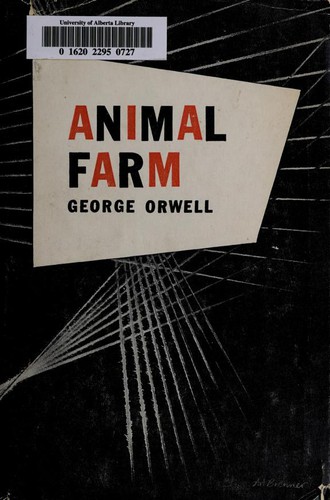
Animal Farm is a brilliant political satire and a powerful and affecting story of revolutions and idealism, power and corruption. 'All animals are equal. But some animals are more equal than others.' Mr Jones of Manor Farm is so lazy and drunken that one day he forgets to feed his livestock. The ensuing rebellion under the leadership of the pigs Napoleon and Snowball leads to the animals taking over the farm. Vowing to eliminate the terrible inequities of the farmyard, the renamed Animal Farm is organised to benefit all who walk on four legs. But as time passes, the ideals of the rebellion are corrupted, then forgotten. And something new and unexpected emerges..
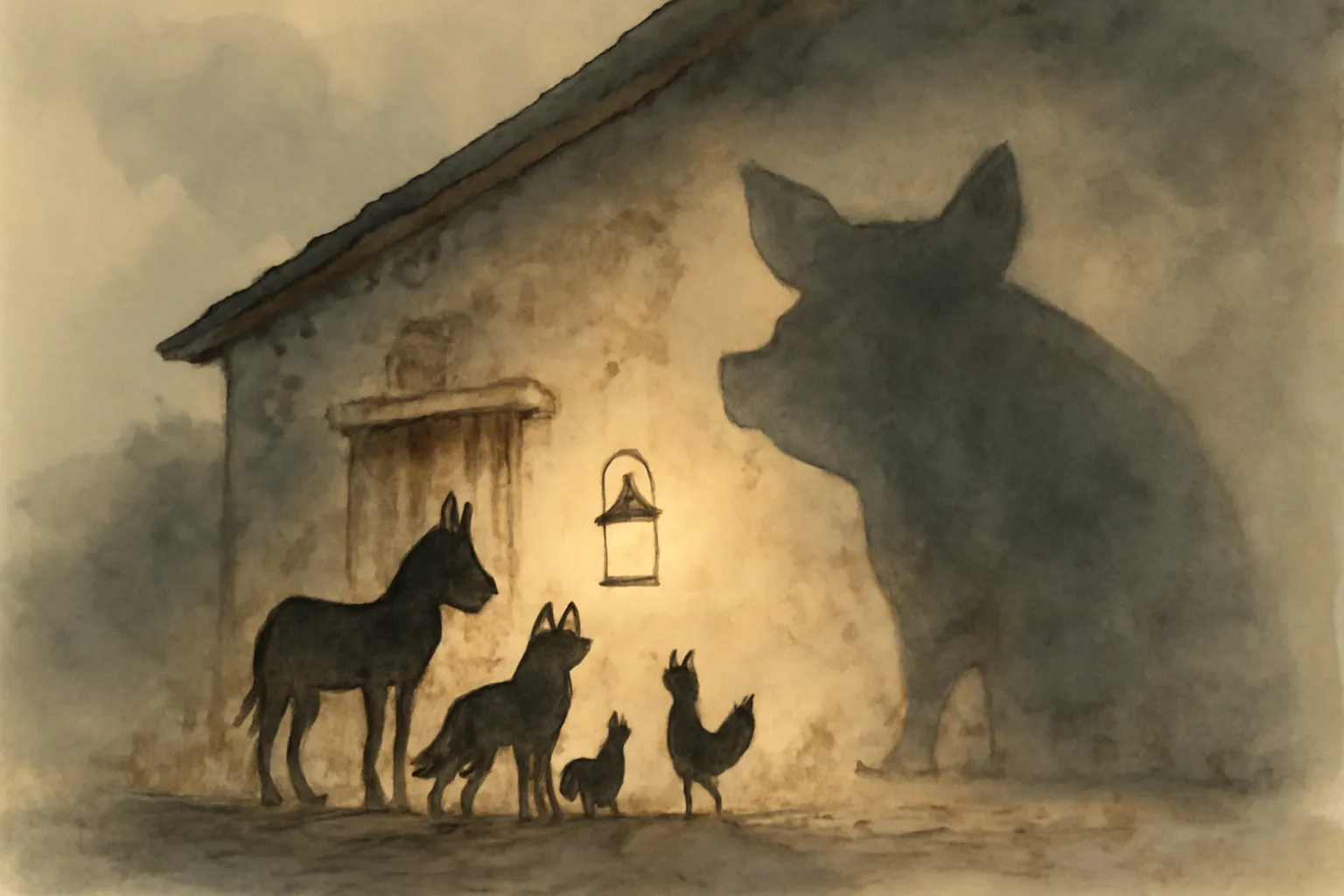
Animal Farm begins with the animals’ dream of a just and equal society, but as their revolution progresses, those ideals are steadily eroded. The pigs, who assume leadership, gradually alter the farm’s founding principles to suit their own interests. Orwell demonstrates how noble visions can be manipulated and lost when those in power prioritize self-interest over collective good, warning that the original spirit of a movement is fragile and easily undermined.
Through the rise of the pig Napoleon, Orwell explores how power can corrupt even those who begin with good intentions. As Napoleon consolidates authority, he becomes increasingly authoritarian, using propaganda, fear, and violence to maintain control. The story illustrates how unchecked power leads to oppression, and how leaders can become indistinguishable from the oppressors they once overthrew.