Business Classics
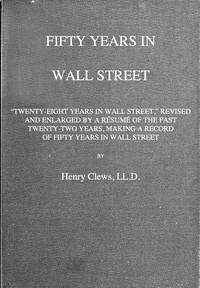
Fifty years in Wall Street by Henry Clews — Summary, Key Ideas & Full Text
1161 pages136 chapters23h 19m read16h 33m speed read✦ 9-min Big ideasFree · no account
Rate it
Unravel the intricate tapestry of Wall Street's evolution through the eyes of a seasoned insider who witnessed its transformation over fifty years
In 'Fifty Years in Wall Street,' Henry Clews provides a captivating firsthand account of his experiences in the heart of American finance. This book offers invaluable insights into the workings of Wall Street, the evolution of its practices, and the personalities that shaped its landscape. Clews reflects on the transformative events that defined the financial world, from the Panic of 1857 to the tumultuous years of the Civil War, and beyond. Readers will not only learn about the mechanics of finance but also about the moral and ethical dilemmas faced by those who operate in this high-stakes environment. Whether you are an aspiring investor, a history buff, or simply curious about the financial world, this book serves as a compelling narrative that intertwines personal anecdotes with broader economic trends.
Henry Clews' 'Fifty Years in Wall Street' provides a vivid and insightful chronicle of the financial district's evolution and the key players who shaped its destiny. Through his personal experiences, Clews reveals the complex interplay of finance, ethics, and societal impact that defines Wall Street. The book serves as both a historical document and a practical guide for understanding the intricacies of financial markets. As readers engage with Clews' narrative, they gain not only a deeper appreciation for the history of American finance but also valuable lessons applicable to today's investing landscape. Ultimately, Clews' work underscores the importance of integrity, resilience, and informed decision-making in navigating the ever-changing world of finance.
“The Panic of 1857... was entitled to the name, as its destructive power and chilling effects had surpassed all other financial gales that had swept over Wall Street.”
“The business activity of the country, and the spirit of intercourse being so rapidly infused throughout all ranks of the community, have demonstrated that this antipathy to Wall Street has been simply an unworthy prejudice.”
“But few gain sufficient experience in Wall Street to command success until they reach that period of life in which they have one foot in the grave.”
Read Henry Clews's work free on Lumina — the complete text plus an 8-minute summary and key ideas, no account needed