
Civilization · Islamic influences · Arabs
The Ornament of the World by María Rosa Menocal — Summary, Key Ideas & Quotes
2006517 pages✦ 3-min Big ideas
Rate it
The Literature of Al-Andalus is an exploration of the culture of Iberia, present-day Spain and Portugal, during the period when it was an Islamic, mostly Arabic-speaking territory, from the eighth to the thirteenth century, and in the centuries following the Christian conquest when Arabic continued to be widely used. The volume embraces many other related spheres of Arabic culture including philosophy, art, architecture and music. It also extends the subject to other literatures - especially Hebrew and Romance literatures - that burgeoned alongside Arabic and created the distinctive hybrid culture of medieval Iberia. Edited by an Arabist, an Hebraist and a Romance scholar, with individual chapters compiled by a team of the world's leading experts of Islamic Iberia, Sicily and related cultures, this is a truly interdisciplinary and comparative work which offers a interesting approach to the field.
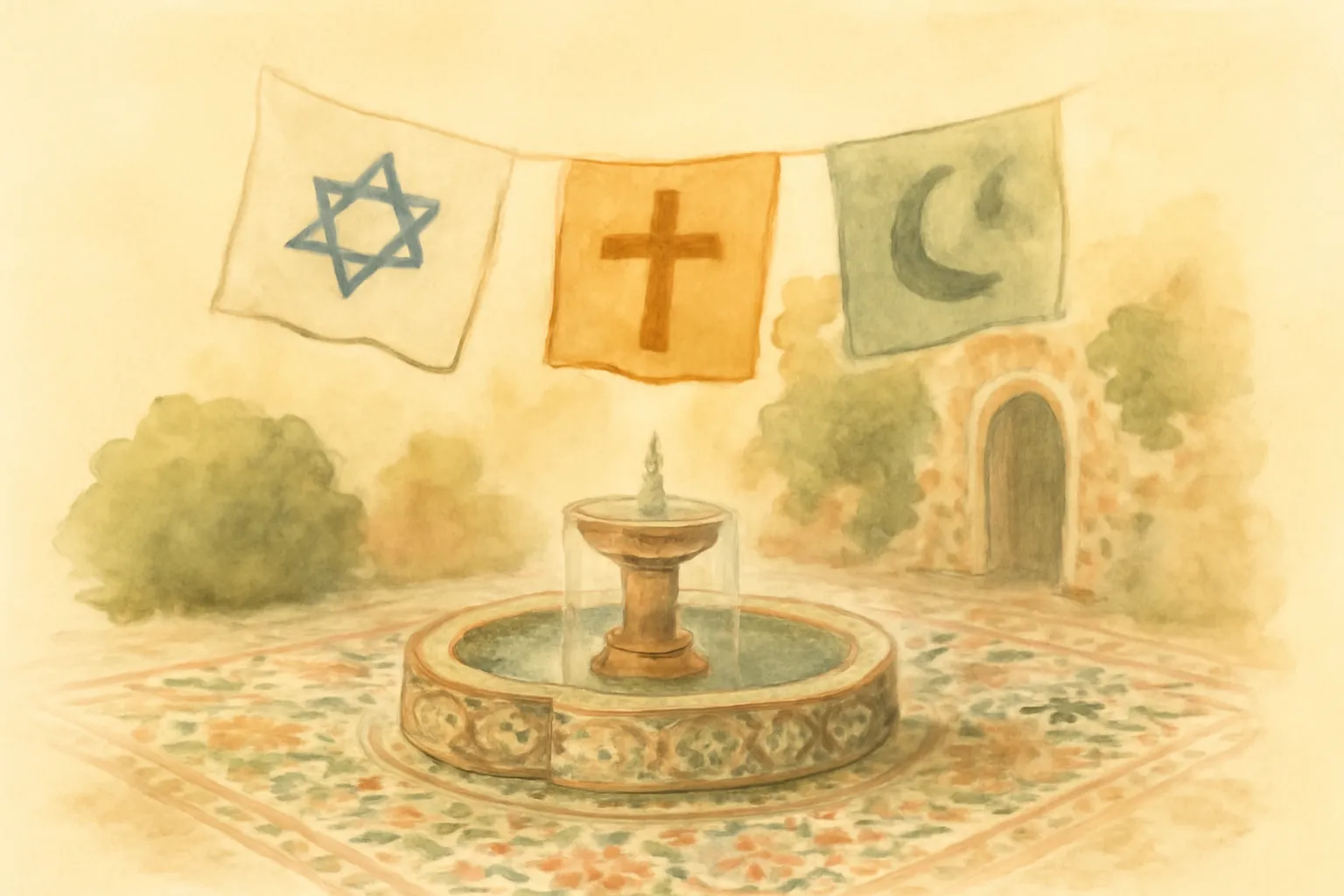
Menocal’s central thesis is the concept of convivencia, the coexistence of Christians, Muslims, and Jews in Al-Andalus. She argues that, contrary to modern narratives of inevitable conflict, medieval Iberia was marked by periods of genuine tolerance and cross-cultural fertilization. This environment allowed for the exchange of ideas, artistic inspiration, and intellectual collaboration, which shaped the region’s unique identity. The book demonstrates how this coexistence was not always perfect or without tension, but it was nonetheless a defining feature of the era.
The book highlights how the mingling of Arabic, Hebrew, and Romance languages and traditions produced a distinctive hybrid culture. Menocal explores how poetry, philosophy, architecture, and science flourished in this environment, with figures such as Averroes, Maimonides, and Alfonso X embodying the spirit of synthesis. The resulting innovations had a profound influence on the broader European Renaissance and on the development of Western thought.
“The cultures of tolerance are always fragile.”
“It was, above all, a culture of tolerance and translation.”