
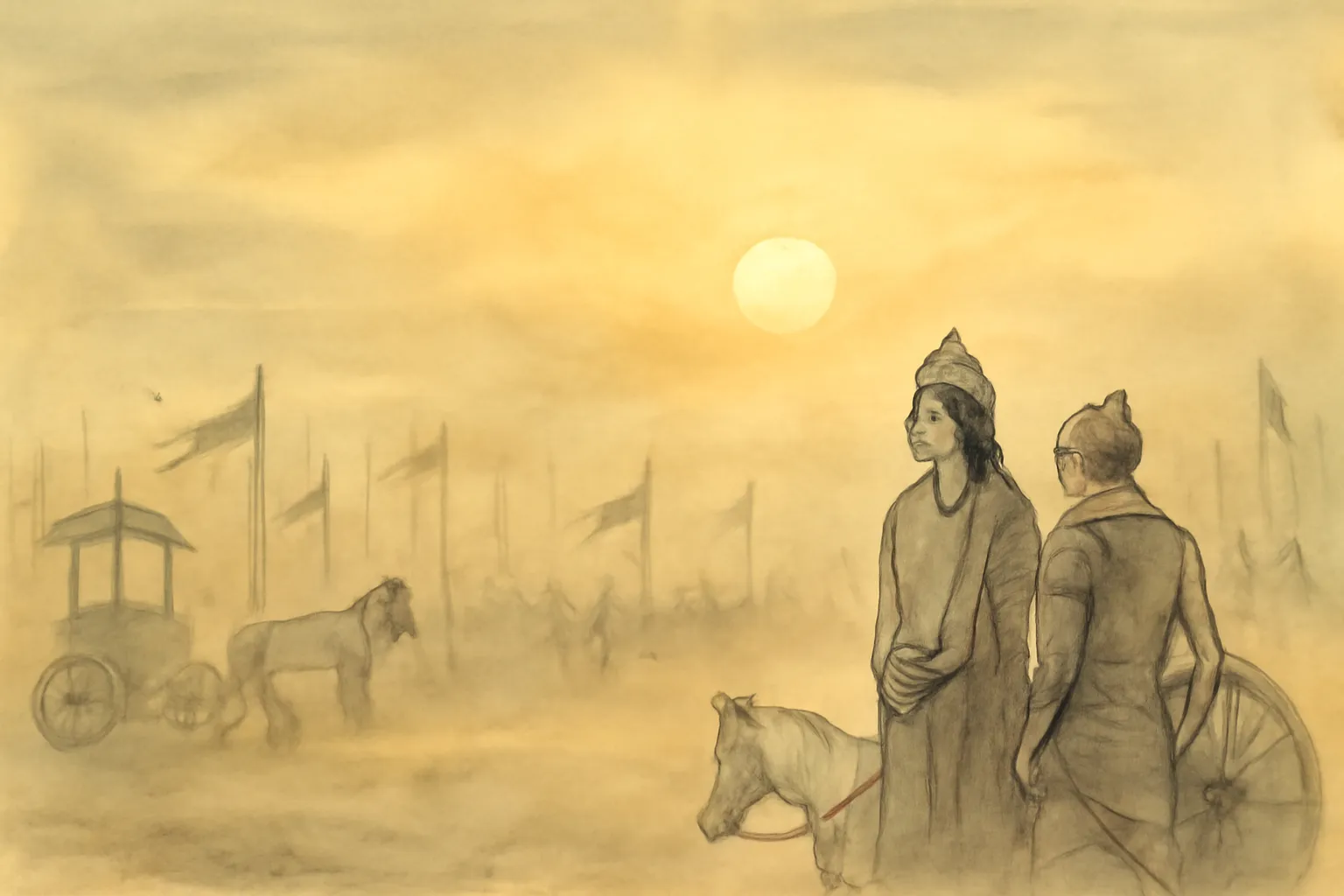
On the eve of battle, the warrior Arjuna falters, and the god Krishna answers with the most beloved spiritual dialogue of India — Edwin Arnold’s luminous verse rendering of duty, devotion, and the eternal soul.
Read full overviewShow less›
The Bhagavad Gita, an ancient Indian scripture, is a philosophical dialogue that takes place on the battlefield of Kurukshetra. It presents a conversation between Prince Arjuna and Lord Krishna, who serves as his charioteer. As Arjuna grapples with the moral dilemmas of war and the nature of existence, Krishna imparts wisdom that transcends time, addressing the core of human experience. Readers will delve into the intricacies of duty (dharma), the nature of reality, and the paths toward spiritual liberation. This timeless text is not just a religious scripture but a guide for living a life of purpose, clarity, and devotion.
The Bhagavad Gita serves as a profound guide to navigating the complexities of life, urging individuals to embrace their duties while remaining anchored in spiritual wisdom. Its teachings on the nature of the soul, the importance of action, and the power of devotion resonate with seekers across generations. By integrating these insights into daily life, one can cultivate a deeper understanding of existence and foster a harmonious relationship with the divine. The Gita's timeless wisdom encourages readers to rise above the challenges of the material world and pursue a path of enlightenment, ultimately leading to liberation and eternal peace.
- 1The Nature of Duty and Dharma
- 2The Eternal Nature of the Soul
- 3The Paths of Knowledge and Action
- 4The Role of Devotion and Bhakti
- 5The Illusion of the Material World
Notable quotes
“Thou grievest where no grief should be! thou speak'st words lacking wisdom!”
“Better to live on beggar's bread with those we love alive, than taste their blood in rich feasts spread, and guiltily survive!”
“Work is more excellent than idleness; the body's life proceeds not, lacking work.”
A glimpse inside

Duty, or dharma, serves as a central theme in The Bhagavad Gita. Arjuna finds himself in a moral quandary, torn between his duty as a warrior and his compassion for his f… Read moreDuty, or dharma, serves as a central theme in The Bhagavad Gita. Arjuna finds himself in a moral quandary, torn between his duty as a warrior and his compassion for his family members on the opposing side. Krishna emphasizes that performing one's duty, even in the face of personal loss, is essential for maintaining cosmic order. This concept of dharma is not merely about following rules; it is about understanding one's role in the larger tapestry of life. Each individual has their specific duties based on their position, and fulfilling these responsibilities is paramount to achieving harmony in society. Show less
Krishna teaches Arjuna about the eternal nature of the soul, asserting that the essence of a person is indestructible. The body is a temporary vessel, subject to birth an… Read moreKrishna teaches Arjuna about the eternal nature of the soul, asserting that the essence of a person is indestructible. The body is a temporary vessel, subject to birth and death, while the soul transcends these physical limitations. This understanding alleviates Arjuna's fears about killing his kin in battle, as Krishna explains that the soul neither kills nor can be killed. This profound realization encourages a sense of detachment from the physical realm and invites individuals to view life from a broader perspective. Recognizing the soul's eternal nature fosters resilience and courage in the face of adversity. Show less
Read the full text — free
About the author
Read Vyasa's work free on Lumina — the complete text plus an 8-minute summary and key ideas, no account needed.
Frequently asked
Worlds to get lost in
Take Lumina everywhere
Read offline, listen to AI summaries, speed-read, and sync your progress across devices — free on iPhone.
Download for iPhone