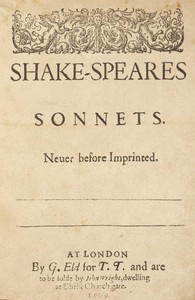

Shakespeare's Sonnets explore the complexities of love, beauty, and mortality, weaving timeless reflections that resonate through the ages
Read full overviewShow less›
William Shakespeare's 'Sonnets' is a profound exploration of human emotion, particularly love, beauty, and the inevitable passage of time. Each sonnet presents a unique perspective, often addressing a young man, a rival poet, and a mysterious dark lady. The collection delves into themes of desire, the fleeting nature of beauty, and the quest for immortality through art. Shakespeare’s language, rich with metaphor and rhetorical devices, elevates these sonnets beyond mere expressions of love, inviting readers to contemplate their own experiences with love, loss, and the relentless march of time. This timeless work resonates with anyone who has grappled with the complexities of relationships and the passage of time, making it a fundamental part of the literary canon.
Shakespeare's 'Sonnets' remain a profound exploration of the human experience, encapsulating the complexities of love, beauty, and the passage of time. Through his masterful use of language and form, the poet invites readers to reflect on their own lives, encouraging introspection and the pursuit of legacy. The themes of aging, self-reflection, and the quest for immortality resonate deeply, making these sonnets timeless treasures that continue to inspire and challenge us. Ultimately, Shakespeare's work serves as a reminder of the beauty and fragility of life, urging us to embrace love and creativity while we still can.
- 1The Desire for Procreation
- 2The Inevitability of Aging
- 3Self-Reflection and Identity
- 4The Nature of Beauty
- 5Love's Complexities
Notable quotes
“Thou art more lovely and more temperate:”
“Not marble, nor the gilded monuments / Of princes, shall outlive this powerful rhyme;”
“When to the sessions of sweet silent thought I summon up remembrance of things past, I sigh the lack of many a thing I sought.”
A glimpse inside

In the opening sonnet, Shakespeare articulates a universal desire for beauty to propagate itself through future generations. Read moreIn the opening sonnet, Shakespeare articulates a universal desire for beauty to propagate itself through future generations. The poet laments that the young man, who possesses such beauty, is selfishly hoarding it rather than sharing it with the world. The line, "Thou that art now the world’s fresh ornament, And only herald to the gaudy spring," encapsulates the importance of legacy and the intrinsic value of passing on beauty, not just for personal satisfaction but for the enrichment of society. The tension between self-love and the duty to others is a recurring theme throughout the sonnets, suggesting that true fulfillment comes from contributing to the continuity of life and beauty. Shakespeare’s plea for the young man to create children becomes a metaphor for the need to share one’s gifts and talents with the world, emphasizing that individual beauty should not be wasted in solitude. Show less
Shakespeare poignantly addresses the ravages of time and the inevitable decline of beauty in several sonnets. For instance, in Sonnet 2, the poet warns the young man that… Read moreShakespeare poignantly addresses the ravages of time and the inevitable decline of beauty in several sonnets. For instance, in Sonnet 2, the poet warns the young man that his beauty will fade, comparing it to a 'tatter’d weed of small worth held.' This stark reminder of mortality serves as a catalyst for the young man to consider procreation as a means of preserving his beauty. The contrast between the youth’s current vibrant life and the certainty of aging deepens the emotional weight of the argument. Shakespeare highlights that, despite the inevitability of decline, there exists a power in creating life: "This fair child of mine / Shall sum my count, and make my old excuse." This invites reflection on how one can achieve a form of immortality by living through their offspring, thereby ensuring that their essence carries on, even as their physical presence diminishes. Show less
Read the full text — free
About the author
William Shakespeare has 9 works free to read on Lumina, including A Midsummer Night's Dream, Hamlet, King Lear
All 9 books by William Shakespeare →