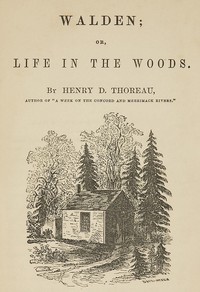

Life in the woods at Walden Pond — simplicity, self-reliance, and deliberate living.
Read full overviewShow less›
Henry David Thoreau's 'Walden' is more than just a memoir of his time spent living in a small cabin by Walden Pond; it's a philosophical exploration of simplicity, nature, and self-sufficiency. Thoreau invites readers to question the societal norms that dictate a life of excess and distraction, urging a return to the essentials. Through his detailed observations of nature and reflections on the human condition, Thoreau illustrates how a life lived deliberately and authentically can lead to deeper understanding and fulfillment. By immersing oneself in the tranquility of nature and practicing self-reliance, readers can uncover the richness of existence often obscured by the chaos of modern life. This exploration encourages a reevaluation of what it means to live well, challenging us to find joy in simplicity and solitude.
Thoreau's 'Walden' serves as a timeless reminder of the importance of simplicity, self-reliance, and deep connection with nature. In an age where distractions abound and societal pressures are relentless, his insights encourage us to pause, reflect, and reevaluate what it means to live a fulfilling life. By embracing the principles of authenticity and intentionality, we can cultivate a richer existence that honors our true selves and the world around us. Thoreau's journey into the woods is not just a personal narrative but a universal call to all of us to seek solitude, embrace nature, and live deliberately. In doing so, we can discover the profound joys that lie within simplicity and connection.
- 1The Value of Simplicity
- 2Self-Reliance and Independence
- 3The Beauty of Nature
- 4Critique of Society
- 5The Importance of Reflection
A glimpse inside

Thoreau emphasizes that most of the luxuries and comforts we pursue are unnecessary and often hinder our true potential. He argues that a simpler life allows for greater… Read moreThoreau emphasizes that most of the luxuries and comforts we pursue are unnecessary and often hinder our true potential. He argues that a simpler life allows for greater clarity and focus, enabling individuals to connect more deeply with themselves and the world around them. By living with less, he found that he could appreciate the beauty of nature and the richness of his thoughts. Thoreau's own experience of living in a modest cabin illustrates this principle; he built his home with his own hands and lived off minimal resources, which he found liberating. He challenges readers to consider what is truly essential in their lives, suggesting that the pursuit of material wealth often blinds us to the more profound joys of existence. Show less
Thoreau's time at Walden Pond epitomizes the idea of self-reliance. He earned his living through manual labor, cultivating beans and living off the land, which instilled… Read moreThoreau's time at Walden Pond epitomizes the idea of self-reliance. He earned his living through manual labor, cultivating beans and living off the land, which instilled in him a sense of independence and personal responsibility. This experience taught him that one does not need to rely on societal structures or material wealth to live a fulfilling life. Instead, he argues that true wealth comes from within and is cultivated through hard work and self-discipline. By engaging directly with nature and the physical world, Thoreau discovered a sense of freedom that many people forfeit in their pursuit of conventional success. He urges readers to embrace their individuality and find their own way, rather than conforming to societal expectations. Show less
Read the full text — free
About the author
Read Henry David Thoreau's work free on Lumina — the complete text plus an 8-minute summary and key ideas, no account needed.
Frequently asked
Worlds to get lost in
Take Lumina everywhere
Read offline, listen to AI summaries, speed-read, and sync your progress across devices — free on iPhone.
Download for iPhone