Philosophy · Short Reads
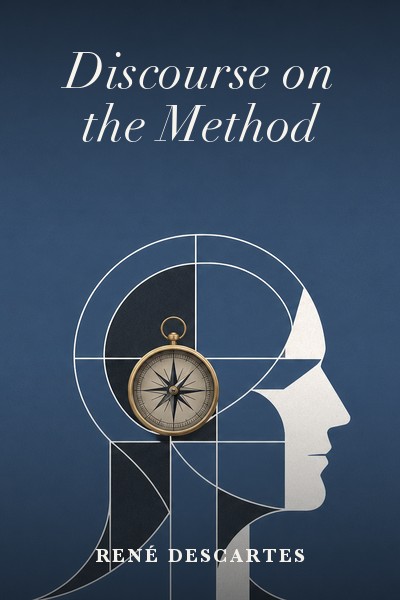
Discourse on the Method by René Descartes — Summary, Key Ideas & Full Text
76 pages6 chapters1h 31m read1h 5m speed read✦ 8-min Big ideas★ 3.0 (1)Free · no account
Rate it
Discover the foundations of modern philosophy through reason, doubt, and the pursuit of truth
René Descartes' 'Discourse on the Method' is a groundbreaking treatise that lays the groundwork for modern philosophical thought. Through a personal narrative, Descartes explores the importance of reason and methodical doubt, leading him to his famous conclusion, 'I think, therefore I am.' The book not only serves as a guide to philosophical inquiry but also addresses the nature of knowledge, the existence of God, and the essence of the human mind. By engaging with Descartes' reflections, readers will gain insights into the process of thinking critically and the significance of establishing a solid foundation for knowledge. This work challenges us to examine our beliefs and the methods we use to arrive at them, ultimately urging us to embrace a more rational approach to understanding the world.
René Descartes' 'Discourse on the Method' serves as a pivotal text in the evolution of philosophical thought, emphasizing the importance of reason, doubt, and methodical inquiry. By challenging readers to scrutinize their beliefs and embrace a structured approach to knowledge, Descartes has laid the groundwork for modern philosophy and scientific exploration. His reflections on self-awareness, the existence of God, and the nature of reality continue to inspire critical thinking and intellectual curiosity. In a world filled with uncertainty, Descartes' insights remind us of the power of rational thought as a means to navigate our understanding of existence and truth. Engaging with his work invites us to reflect on our own methods of inquiry and the principles that guide our beliefs.
Read René Descartes's work free on Lumina — the complete text plus an 8-minute summary and key ideas, no account needed